
Travel Photography Tips & Insights
A Portrait of Fire: How to Photograph Fireworks at Recco’s Sagra del Fuoco
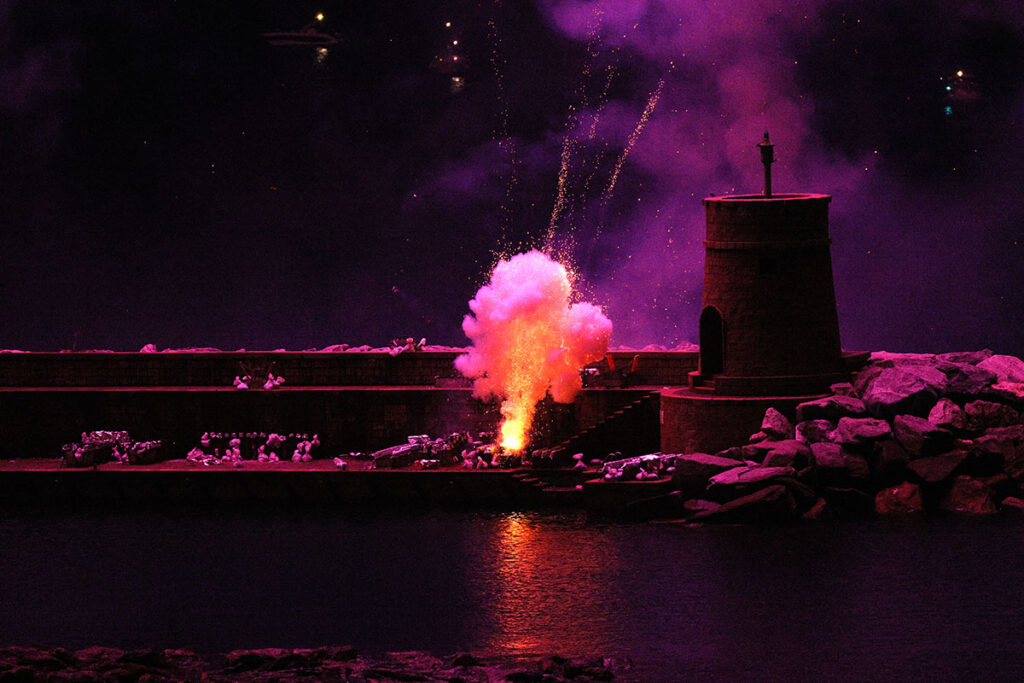
Aug
There are few subjects in photography that will exercise your camera skills the way fireworks will. You have a few seconds -sometimes less- between the launch and the final bloom, and in that window every setting you’ve ever read about in a manual suddenly becomes urgent and visible.
Shutter speed isn’t a number on a dial anymore. It’s the difference between a frozen spark and a sky-spanning trail. ISO becomes the compromise you’re making for the shot you’d otherwise miss. The dials stop being dials and start being decisions.
I live in Recco, a small town on the Ligurian coast that does not, under any circumstances, mess around with fireworks. Every September the town hosts the Sagra del Fuoco, and the whole place essentially becomes a working laboratory for pyrotechnics.
The competing teams aren’t visitors from elsewhere. They’re the neighborhoods of Recco itself, each one lighting up the sky on its own night, and the unspoken scoring system in the crowd is real even if nobody admits it.
There are daytime shows, yes – fireworks in the daytime, and nighttime finales that go on long enough and loud enough that your chest stops asking your brain for permission to feel things.
If you want a place to push your photography in a high-pressure setting, Recco delivers. If you just want to watch fireworks, it’s also one of the best seats in Italy.
This post is what I’ve learned over years of pointing a camera at the Recco sky, written for photographers who want to get better and for travelers who might find themselves at a fireworks show with a camera, or a phone, and want to come home with something more than a smear of orange light.
Why fireworks make you a sharper photographer
Fireworks won’t make you a better photographer on their own. What they will do is force you to make a lot of decisions in a very short window, and that pressure exposes the gaps in your technique faster than almost any other subject I can think of.
There’s no recomposing later. There’s no “let me try that again.” The burst happens; you either got it or you didn’t, and a new one is already bursting in the sky.
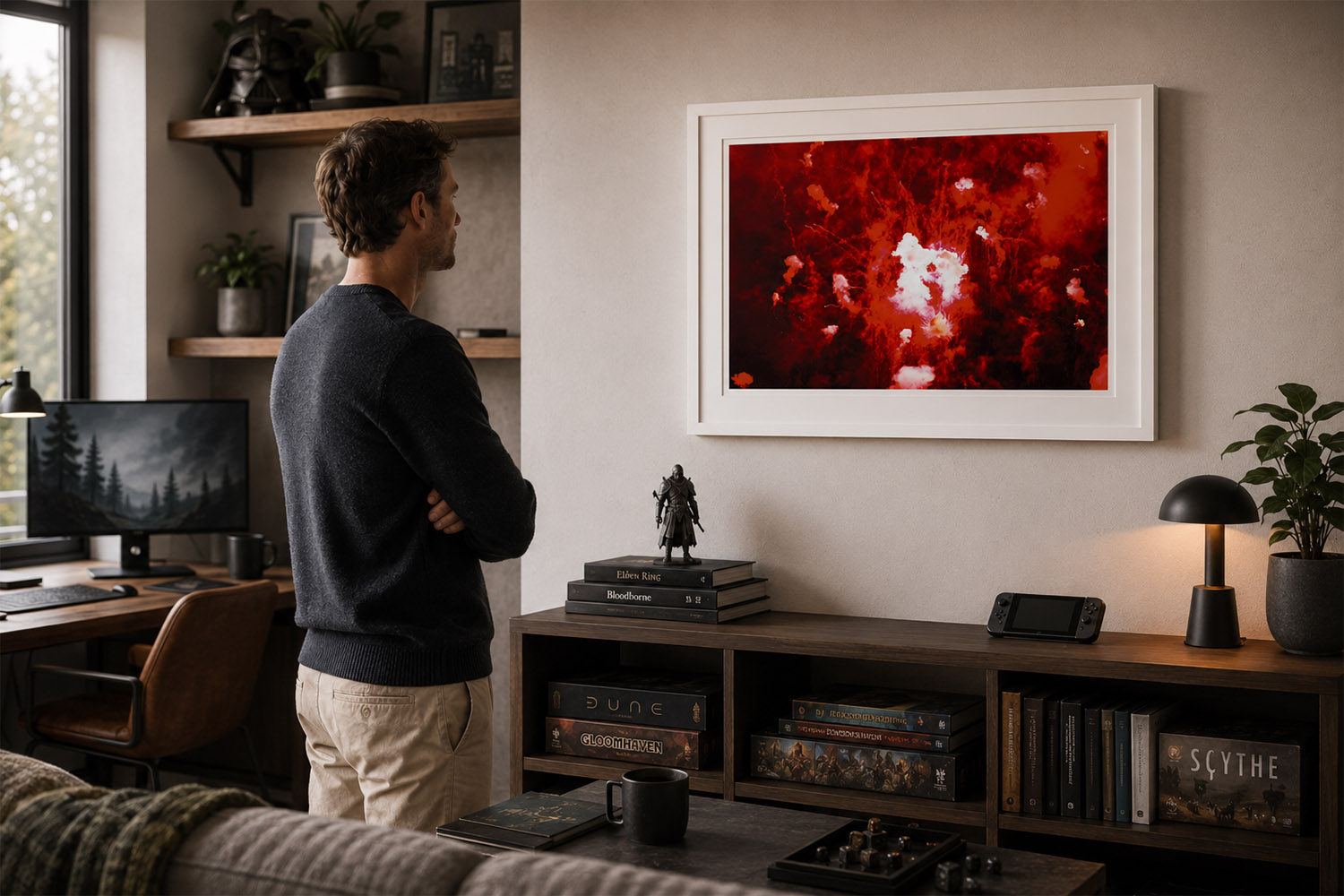
That feedback loop is the value. You learn shutter speed in your bones because a short exposure freezes the explosion at a specific moment, capturing the points of detonation as sharp, jagged stars before the trails unfold.
A longer exposure does the opposite. It lets the whole bloom paint itself across the frame as the soft umbrella shape we tend to associate with fireworks in memory. Neither is correct or wrong. They’re different photographs of the same event, and once you’ve taken both back-to-back, you understand how to dial in a way no tutorial can teach you.
ISO is its own conversation with the night sky. Push it too high and the dark areas crawl with noise. Keep it too low and you’ll miss the focus entirely on a fast subject, or end up with a shutter speed that smears what you wanted to freeze.
Aperture is the lever you reach for when ambient light starts to matter, and during a fireworks show that environment is constantly shifting as smoke catches color from the previous shell and the sky brightens and darkens in waves.
I’ll say this honestly… getting consistently good fireworks shots, especially with a long lens, takes technique and a lot of repetition. The skills carry over to everything else you’ll ever shoot. But the learning curve is real.
Throughout this post, I’ll share some of the photos I’ve taken at Recco’s Sagra del Fuoco over the years. You can see the full Recco collection here.
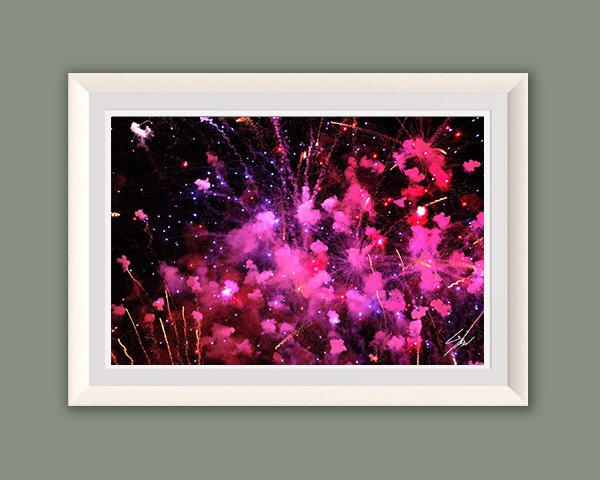
Lenses, and why I shot two completely different nights
I shot the Sagra over two evenings and chose deliberately different setups for each. Mostly because I wanted to see variety in what I came home with.
The first night I worked with a 70-200 and my phone. The 70-200 is the classic fireworks lens. It’s versatile, compressed, gives you isolation on individual bursts without locking you into a single focal length. My phone was there to grab the moments where computational photography genuinely earns its keep.
The second night I switched to a 24-105 and a 300mm prime. And honestly, the best and most fun results came from the 300mm.
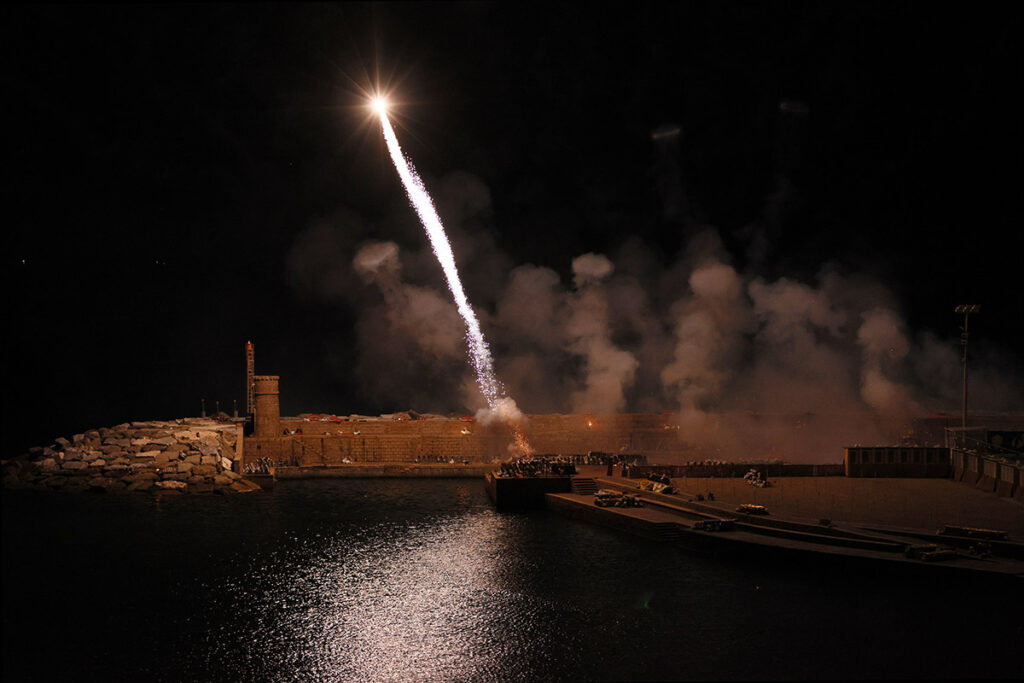
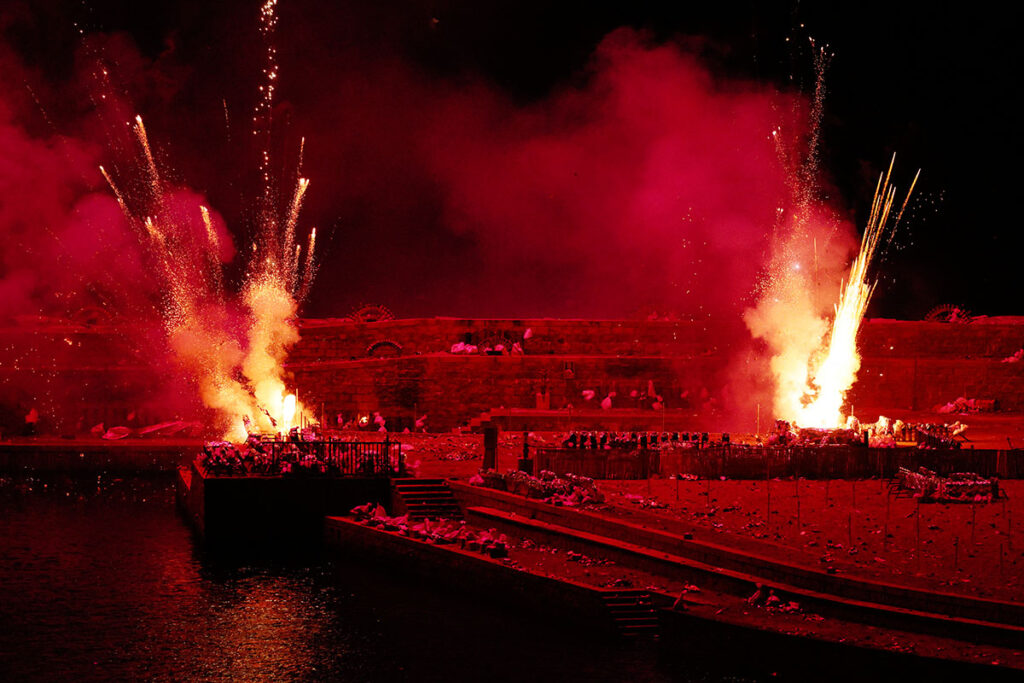
I wanted something different from the standard fireworks photo – a portrait of fire.
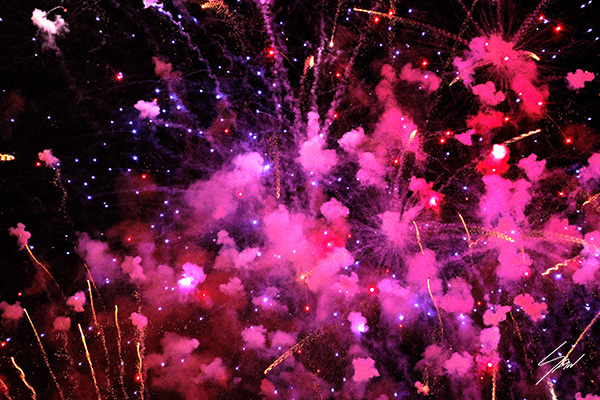
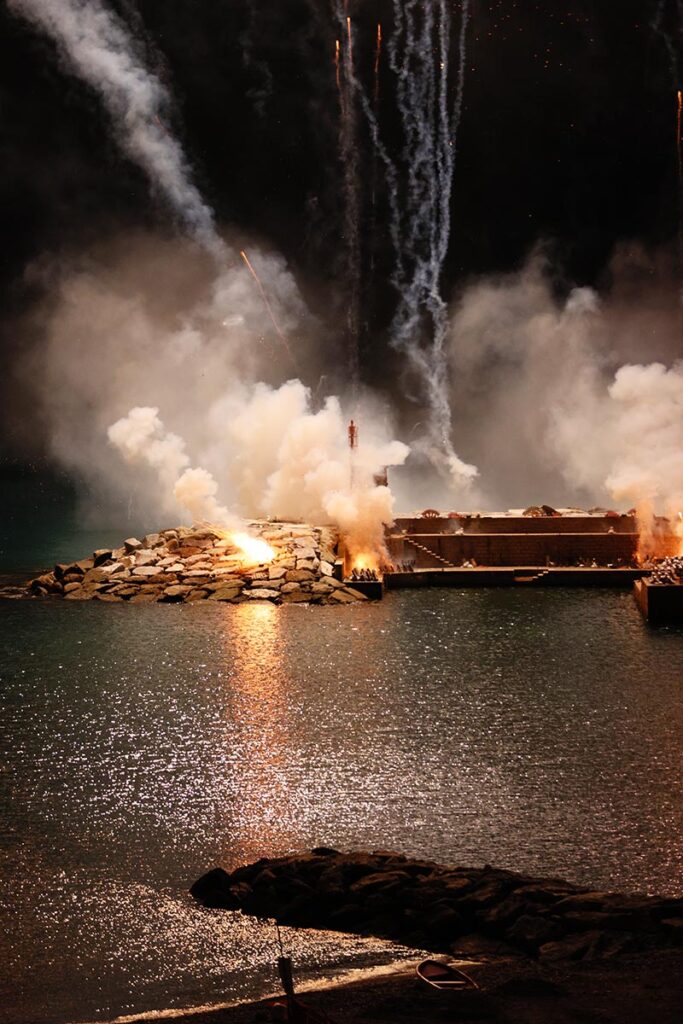
To be clear about what that means, I’m not talking about macro. They are still scenes of explosions. Still wide enough to read as fireworks. But tight enough that you’re working with clusters, individual shells, the unique geometry inside a single burst, the moment of detonation at the launch site rather than the whole sky going being lit.
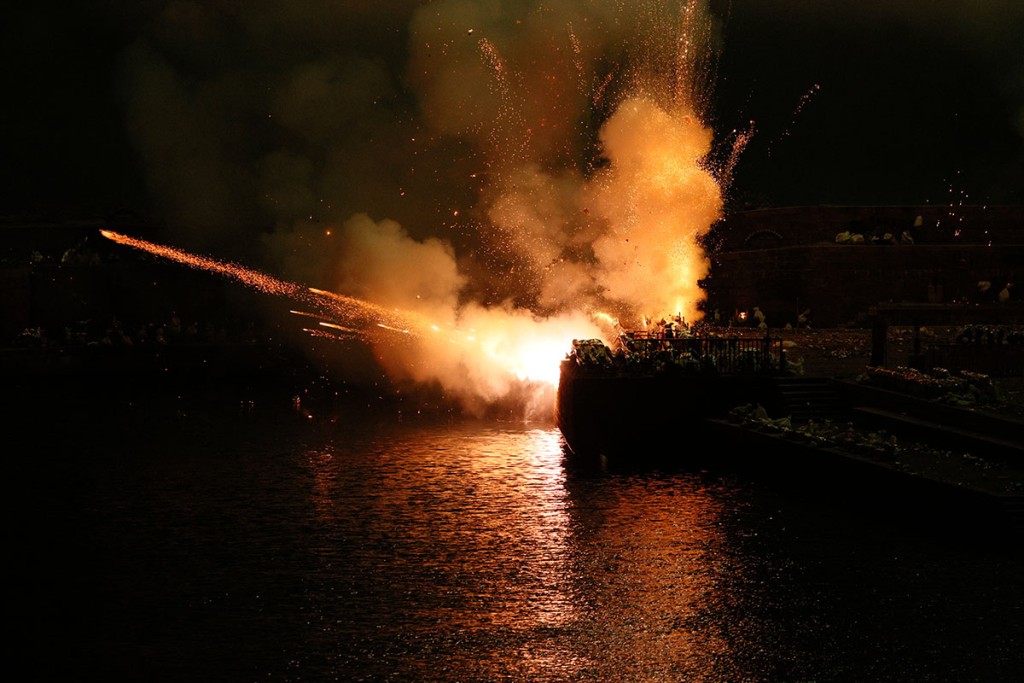
With a 300mm trained on the point of detonation, you stop photographing fireworks and start photographing the instant a star is born. The dense pulse of light at the heart of the shell, the first milliseconds of fragmentation before the trails even read as trails.
The hit rate is brutal. You miss more than you keep, which is why continuous high burst mode lives on permanently at that focal length – if you’re hunting for a specific millisecond, you’re firing off frames at 10 a second and hoping one of them is the one.
And that’s the whole point of the exercise, because when you’re working that tight you’re not documenting a fireworks show anymore. You’re isolating a single moment of combustion and treating it as a subject in its own right, the way you’d treat a face.
Most of what makes it into the frame is decided in the half-second before the burst, which means the photograph exists almost entirely in anticipation. The keepers don’t look like fireworks photos. They look like something else entirely.
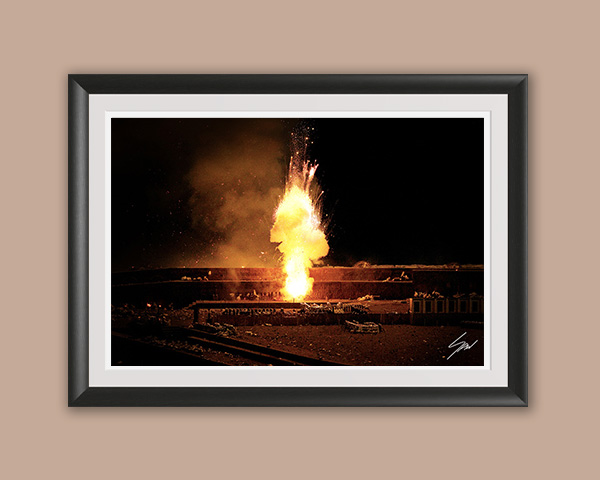

The shots I enjoyed the most were the ones that showed people what they can’t usually see from the shore. The intimate version of a public spectacle. The details that get lost when you’re standing on the beach watching with your naked eye.
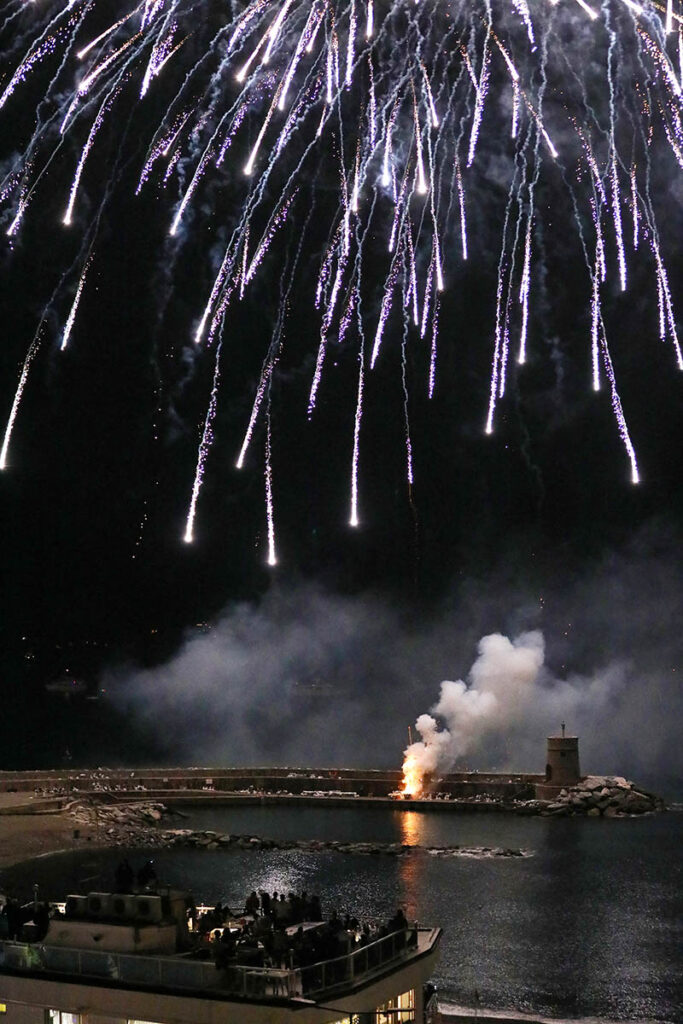
The wider lenses had their moments too, and they earned their place in the bag. I had a lucky vantage point during one of the shows, an elevated position on top of a five-story building near the water, which let me work much wider than I usually could.
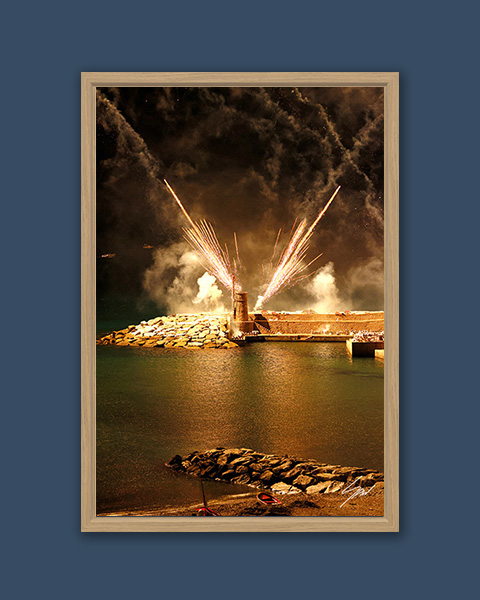
From that height, I could include the sky, the sea, the jetties, the Torre del Faro, and sometimes the beach – depending on focal length – without ever having to compromise on where the bursts were happening. Those establishing shots matter. They give the rest of the work context. They tell the story of where you are. But most of the time, even from up there, I gravitated toward the tight shots stuff.
Settings: faster shutter, lower ISO, wide open
I didn’t shoot long exposures during the Sagra. That’s the conventional fireworks technique – tripod, multi-second exposure, draw the trails across the frame – and it produces a specific look that everyone has seen.
I wanted the opposite. I wanted to freeze the fireworks mid-motion. So my approach was the fastest shutter speed I could get away with, the lowest ISO I could maintain at that shutter, and the lens wide open. The goal was to catch the bursts before they were fully expanded. Still climbing, still directional, still intentional about where they were going before the spread softened them into the usual symmetrical bloom.
A firework that hasn’t fully opened still has personality. You can see the trajectory in the trails. Once it’s fully expanded it’s just a generic shape.
I never used a tripod. Not for these shots, not really for anything. I’m always on the go, constantly reframing, switching from landscape to portrait, tracking shells across the sky. A tripod is the wrong tool for that, even though every fireworks tutorial on the internet will tell you otherwise. The tutorials are right for the long-exposure approach. They’re wrong for what I was doing.
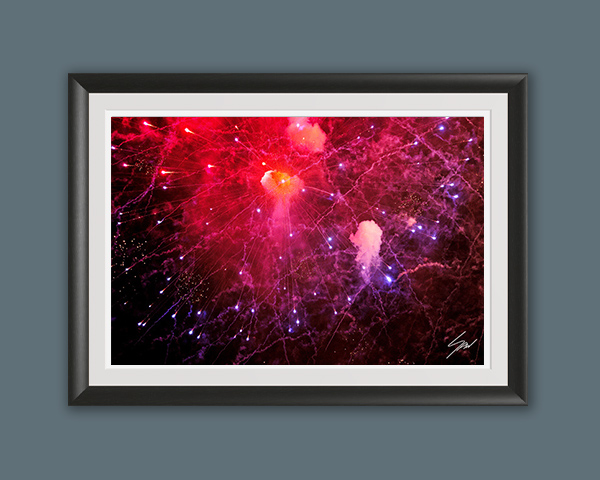
Learn the tracers
This is the single most useful skill I can pass on, and almost nobody talks about it.
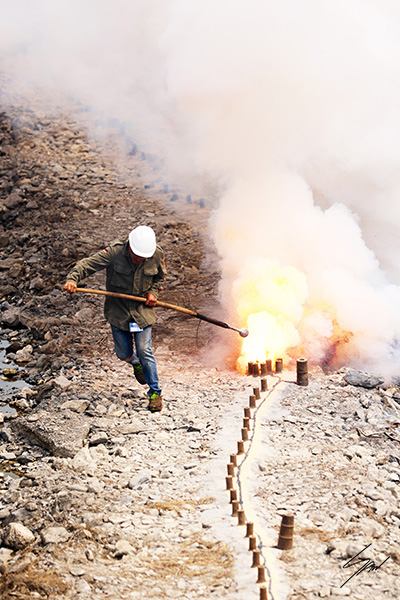
The fireworks you see exploding in the sky started as tracers, lit explosives with fuses, launching upward from the ground. They make a sound. They leave a brief trail. If you watch the first few salvos of any show, you can start mapping the rough zone where the fireworks are going to explode. Each team launches from a fixed position with a fairly consistent altitude range and spread. Once you’ve clocked that, you stop reacting to bursts and start anticipating them.
This matters most when you’re working long. With a 300mm, the area in your viewfinder is small. You will absolutely miss bursts that detonate outside your frame. Trying to chase every shell is a losing game. A better strategy is to figure out the edges of where most of the fireworks are going to open, pick a tighter zone inside that envelope, and commit to it. You’ll miss some entirely. You’ll get many more keepers in the ones you do catch.
Two practical habits that took me too long to develop:
Listen for the launch. The tracer makes a thump on the way up that precedes the detonation by a meaningful fraction of a second. If you train your ear to it, you’ll be pressing the shutter before the burst is visible, which is exactly the timing you want for catching the early stages of the explosion.
Give the shell room when you can. With a long lens you can’t always afford to, and that’s fine. That’s the trade-off. But with a 70-200 or wider, framing a little loose means you don’t get clipped when a shell opens wider than expected. You can crop later. You can’t uncrop something that overflowed your viewfinder.
Portrait or landscape?
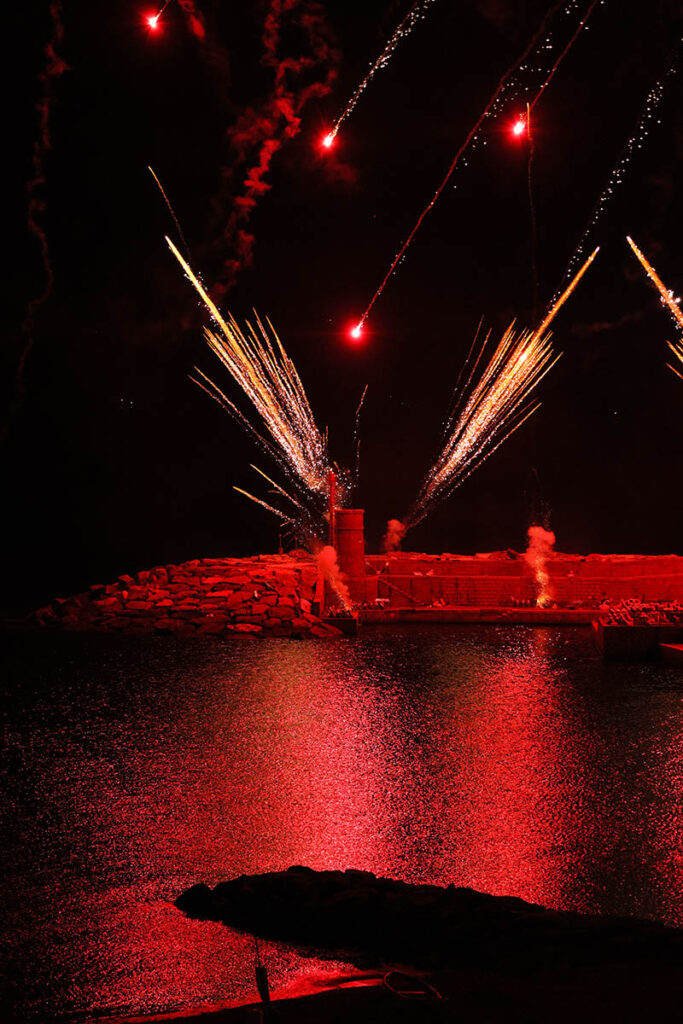
Most of what I shot was landscape. Fireworks tend to spread horizontally as much as vertically, especially the bigger sky-fillers, and shooting in landscape matches that natural shape. It’s also the orientation that lets you include the horizon, the sea, the jetties. Context that makes the photograph about a place and not just a burst.
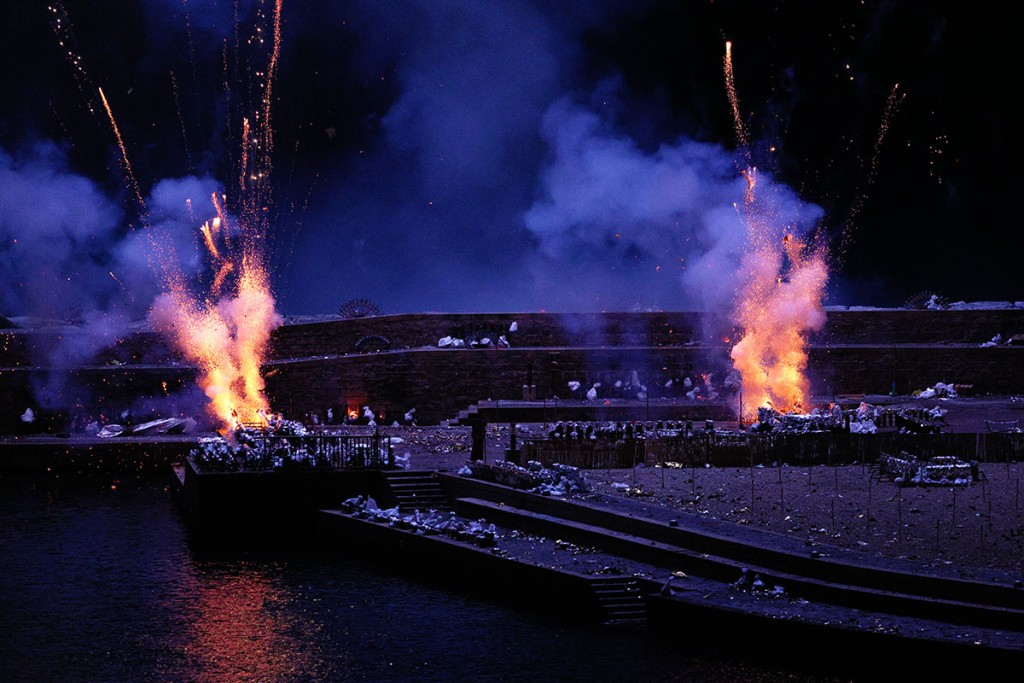
But portrait orientation came into its own during the day shows. The daytime fireworks didn’t spread the same way. They were more compact, more directional, and several of them launched straight up from a much narrower fan. Portrait framing made sense for those because the frame mirrored the angle. Portrait was also better when I wanted to establish the scene with other subjects in it, like people watching or structures on the beach, because it let me stack subjects and burst in a way landscape couldn’t.
The rule, if there is one, is that the orientation should match the shape of the burst and the relationship between the burst and whatever else you want in the frame. Default habits will steer you wrong.
Where the phone wins, honestly
A modern smartphone is not inherently better than a serious camera for fireworks. In the right hands, it’s not even close. But there are specific situations where a phone is genuinely the smarter tool, and a good photographer should know which ones.
For starters, a phone wins on the ease of use. It wins on perceived dynamic range and HDR rendering straight out of the camera, both for stills and especially for video. It wins for low-light video in a way that’s genuinely hard to beat without a properly configured cinema setup. And it wins when the goal is to share something immediately, with no post-production stop in between.
A 300mm raw file of a firework at the instant of detonation needs to go through software before anyone sees it. A phone clip of the same fireworks is already on its way to your group chat before the smoke has cleared.
I shot phone footage during one of the Sagra nights for exactly this reason. It wasn’t technically better, but it was the right tool for that part of the job.
One genuinely useful tip if you’re shooting fireworks on a phone: long-press the screen to lock AE/AF before the show starts. Most phone fireworks shots fail because the phone tries to refocus and re-meter every time a firework pops, which means half your frames are mid-hunt for focus. Lock it once on the sky where the bursts are happening and the phone stops fighting you.

Daytime fireworks: the thing nobody tells you
Recco does daytime fireworks during the Sagra del Fuoco, and I’m convinced this is one of the most underrated photographic spectacles in Italy. The daytime ones produce dense, colored smoke not sparks and they paint the blue Ligurian sky with sudden vivid bursts of pink, green, yellow, and red. It looks like a Murakami painting exploding in slow motion above the harbor.
The settings change completely. You’re now in bright sun, which means base ISO, fast shutter, and a narrower aperture if you want depth. You’re also no longer working with a luminous subject against darkness. You’re working with colored matter against a bright sky, which means your exposure has to favor the sky to keep the smoke from blowing out into pastel mush.
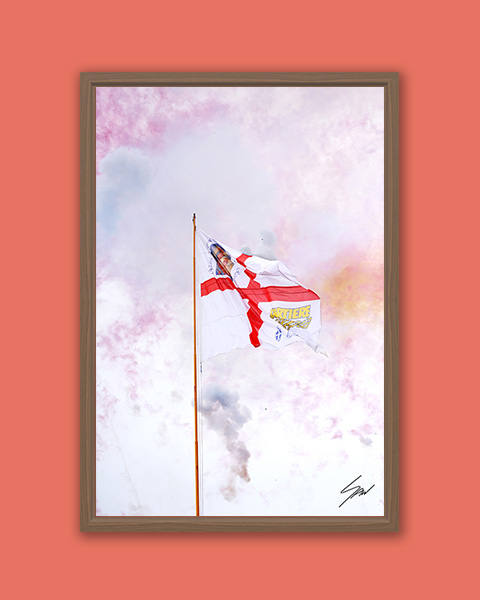

Framing matters more in daylight. At night, the dark sky hides everything you didn’t want in the frame. In daylight, the whole environment is visible -wires, balconies, the boat that’s currently motoring across your composition- and you have to compose deliberately. You also have to read the wind, because the smoke drifts, and a tight burst becomes a smear heading toward the hills within seconds.
Daytime fireworks reward patience and punish autopilot. They’re an excellent reason to slow down and think about what you’re actually doing with the camera.
One piece of gear worth mentioning here: a circular polarizer. You’re shooting saturated colored smoke against a bright Ligurian sky, and a polarizer will deepen the blue, cut atmospheric haze, and make the smoke colors pop in a way that’s hard to replicate in post production. It’s the one filter I’d actually recommend bringing to a daytime fireworks shoot. At night it just costs you light, but at midday it earns its keep.


A loose cheat sheet
For night fireworks with the freeze-the-motion approach I shoot wide open, push the shutter speed as fast as you can while keeping ISO as low as possible. Focus manually on the first few bursts using live view magnification and then lock it (don’t trust the infinity mark on the lens, modern primes and zooms can focus past it), raw format, continuous high burst mode. Track the tracers. Pick your zone. Commit. Reframe between bursts as the show evolves.
For night fireworks with the conventional long-exposure approach: ISO 200-400, aperture f/8 to f/11, shutter 1 to 4 seconds, tripod, remote release or 2-second timer. This is the classic technique and it absolutely works. It just produces a different photograph from what I was after.
For daytime fireworks: base ISO, narrow aperture, shutter 1/500 or faster, expose for the sky, and burst mode helps. Portrait orientation works better than you’d expect, especially for the ground-launched shells that go straight up.
For all of it: arrive early. Scout your position. Check the wind. Decide what you want in the background before the show starts, because once it does, you’ll be reacting.
Why this is worth your time
Fireworks won’t single-handedly make you a better photographer. But they will compress a huge range of decisions into a short window and force you to actually make them. There’s no faster way to find out which parts of your technique are solid and which parts are still hypotheses.
If you ever find yourself in Liguria in early September, come to Recco. Bring a long lens if you have one. Bring a wider lens too. Bring your phone. Watch the daytime shells paint the sky, then come back at night and watch the same sky disappear under a roof of light and sound. Shoot too much. Throw most of it away. Keep the three frames that taught you something.
That’s the whole craft, really. Fireworks just make it impossible to ignore.
Sagra del Fuoco 2026
The main firework festivities are scheduled every year on September 7th and 8th.
On the 7th there are only night fireworks. On the 8th they have significant fireworks/explosions during the day, and at night.
Throughout the city over the course of several days you can find street food hosted by each neighborhood, music, festivities, etc. Hope to see you there!
Here’s a link to the General Program for 2026 on the official website. Yes, it’s in Italian 🙂 Either brush up on your language skills, or use your preferred translator 😉
Want to keep reading?
Check out some of my other posts about Recco, Italy:
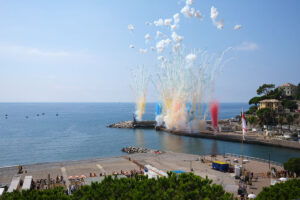
Inside the Fire: Photographing Recco’s Sagra del Fuoco 2026
Every September, Recco becomes something completely different. The streets fill, the seven Quartieri open their [...]
Read More
New Art Installation at Il Fondo Birreria in Recco
The Last Rider is now on display at Il Fondo Birreria in Recco. Created just [...]
Read More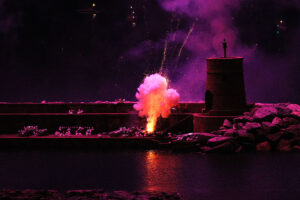
A Portrait of Fire: How to Photograph Fireworks at Recco’s Sagra del Fuoco
There are few subjects in photography that will exercise your camera skills the way fireworks [...]
Read More
New Fine Art Collection: The Duality of Recco
A few years ago, Recco became home. It’s a small town tucked between the Ligurian [...]
Read More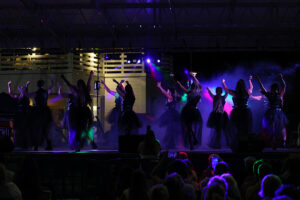
A Dance of Light
A live performance in Recco became a study in light, color, movement, and human expression- [...]
Read More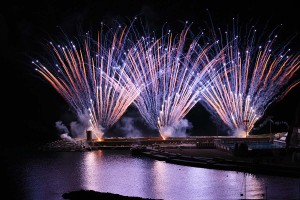
Sagra del Fuoco in Recco
Every September, Recco turns into something different. Bells echo through the hills, cannons shake the [...]
2 Comments
Read More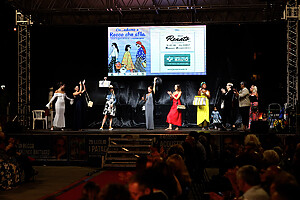
Recco che sfila 2025
This past Saturday I attended the third edition of Civ…ediamo a Recco che sfila 2025, [...]
Read More
Liguria in Focus: Megli’s Sagra delle Focaccette
I'm really happy we decided to go to this small, but honestly fun festival near [...]
Read More
Rediscovering the Waves: Recco, Italy
In the year leading up to our wedding in Florence in November 2023, I spent [...]
Read More