
Travel Stories from the Road
Under the Shadow of Il Torrazzo: Exploring Cremona for the first time
Jan
My wife and I were staying in Santo Stefano Lodigiano for a couple of weeks, as I had a handful of cities I wanted to check out that were reachable from the country house we had found for ourselves and the dogs. Not just to photograph, but to get a feel for and see if they might be the kind of place we could actually live one day. Cremona was on that list, but mostly just a name. I hadn’t dug deep and that was intentional.
When I visit a new city for the first time, I prefer to arrive with very little context. No real plan, no deep dive in advance. I like that first experience to be mostly raw. Shaped by the details I notice, the streets I walk, and the moments I happen to stumble upon. The bulk of the research comes later, once I’m home. That’s when I start to understand more about what I saw and, and the ‘why’ behind how it felt comes into focus.
Cremona made a strong enough impression that I know I’ll be back- next time with more context and an even deeper appreciation for this wonderful city.
The train ride over was short. Just long enough to read a few things about the city’s reputation for violin-making, Stradivari, and its architectural center.
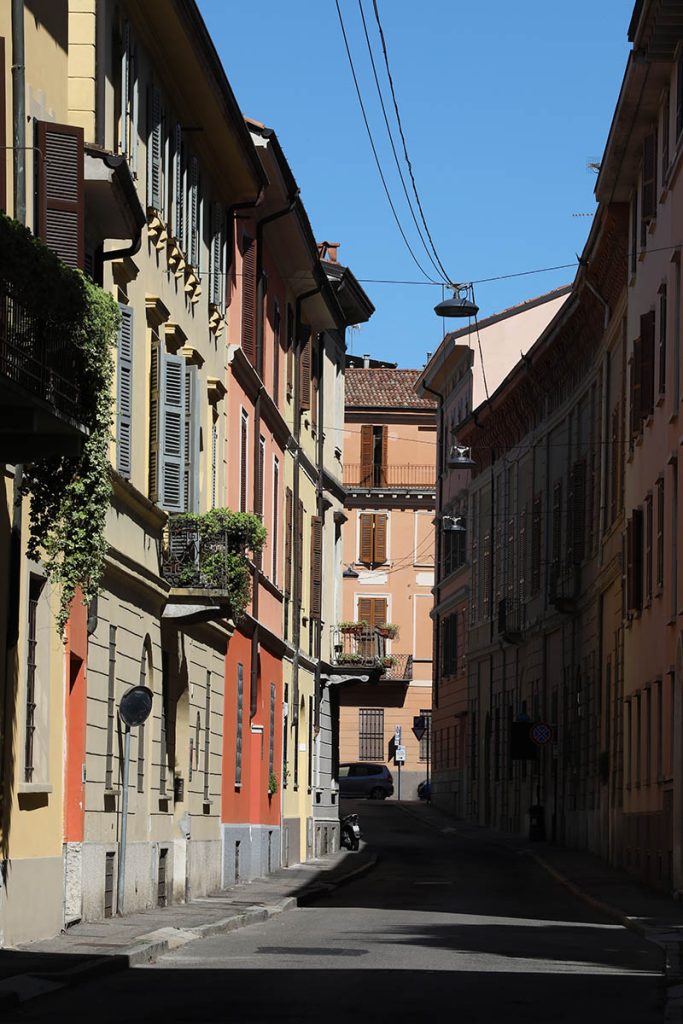
The first thing that stood out was the color. Warm earth tones in soft reds, oranges, and yellows created a natural harmony along the streets. Then there was this beautiful statue of a huge violincello by the architect Giorgio Palù.
But first on the agenda? Coffee, and a place to gear up.
After grabbing some breakfast, I felt drawn, for whatever reason, toward the road curving left out of the station and around the city. We walked through Il Parco Al Vecchio Passeggio and continued with a gentle zigzag along Viale Trento e Trieste, then followed Via Gaspare Pedone all the way to the Parco dei Bastoni di Porta Mosa.


Remember, this wasn’t a trip that was all about the big monuments – which we will certainly get to – it was also about seeing where we might live. We knew that wasn’t going to be in the immediate city center like in Florence. So we wanted to get a sense of the suburbs, how they looked and felt.
What the parks were like, if there were any dog runs, and how many shops, cafes and restaurants there were. The usual day-to-day stuff. So, we continued to cruise along via Manini and, in all honesty, the area was pretty nice and quiet.


After getting a feel for daily life in the outskirts, we started heading back towards the center, and that’s when I came across a building I couldn’t resist taking a bunch of photos of. It had such a rich and vibrant rusty red color that really stood out to me and it stretched an entire city block. Based on what I read later it is an elementary school: Scuole Pubbliche Elementari III Circolo R.Colombo, and part of it appears to be the Conservatorio di Musica “C. Monteverdi” di Cremona.


After probably spending far too much time admiring one of the most random buildings in all of Cremona, I knew it was time to head to the duomo in the piazza.
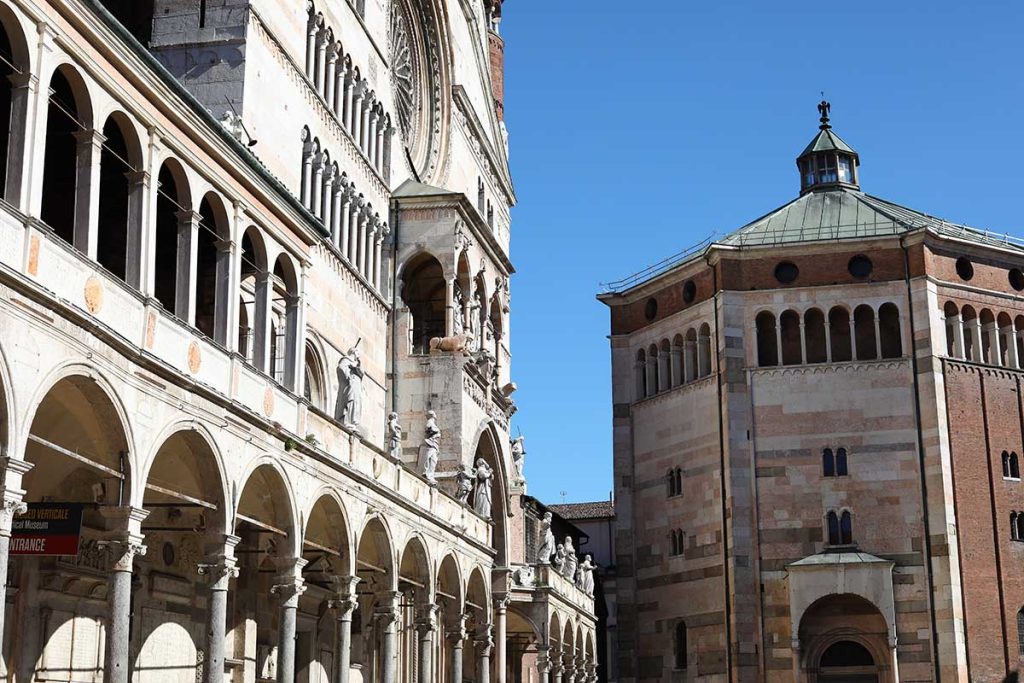
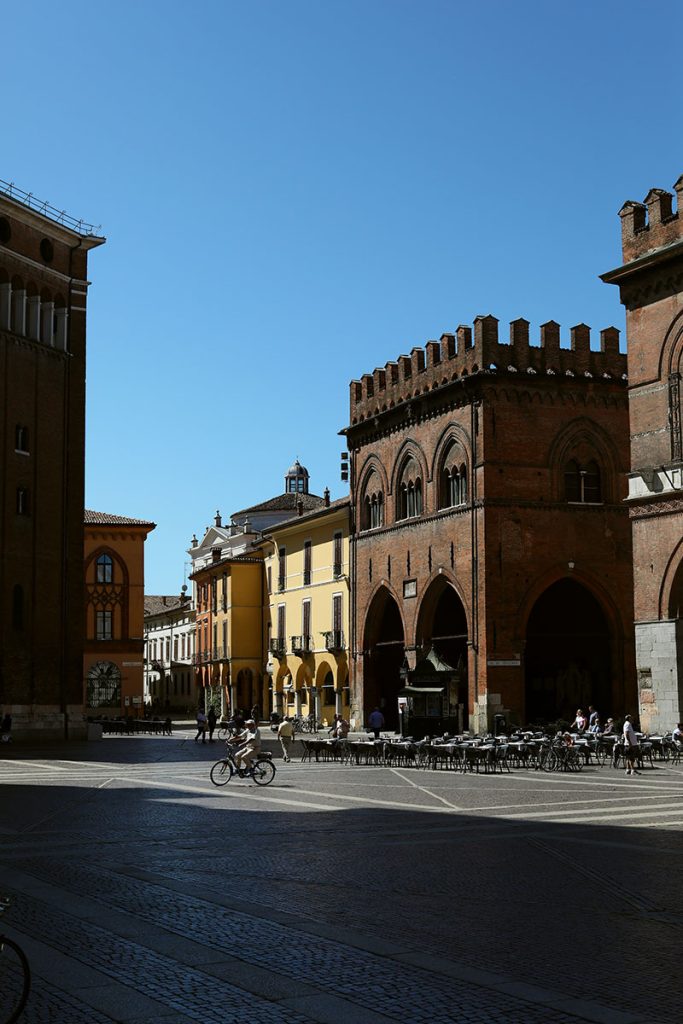
Piazza del Comune is the visual anchor of the city, and honestly, one of the most striking piazzas I’ve seen in Italy. It has that same sense of scale and importance as cities like Florence or Bologna but without as much of the noise. It’s a great place to simply exist and admire the architecture.
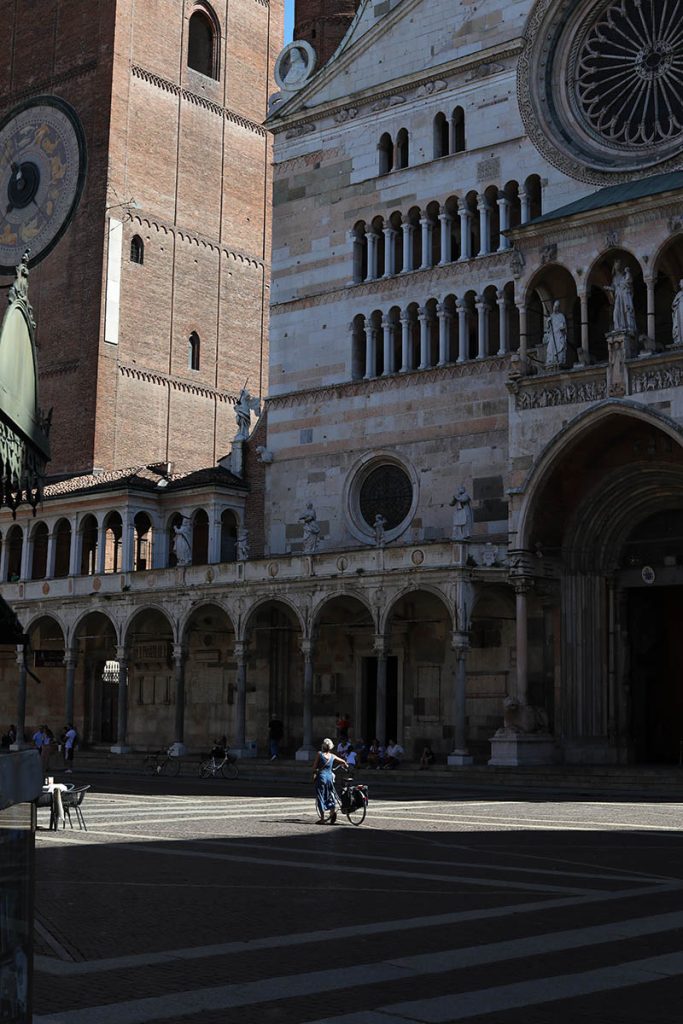
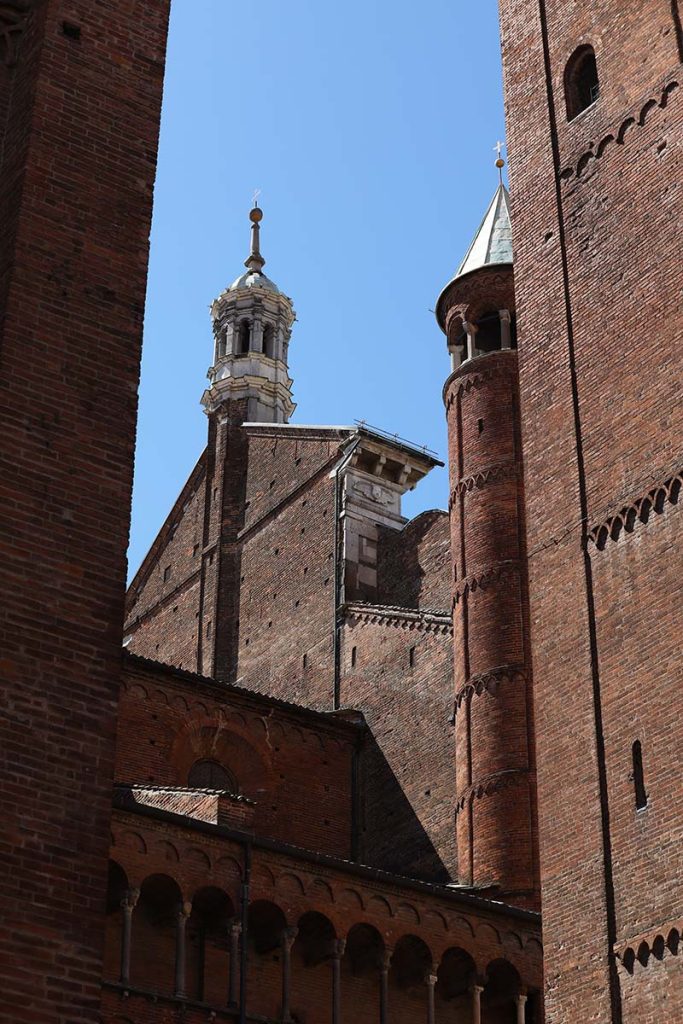
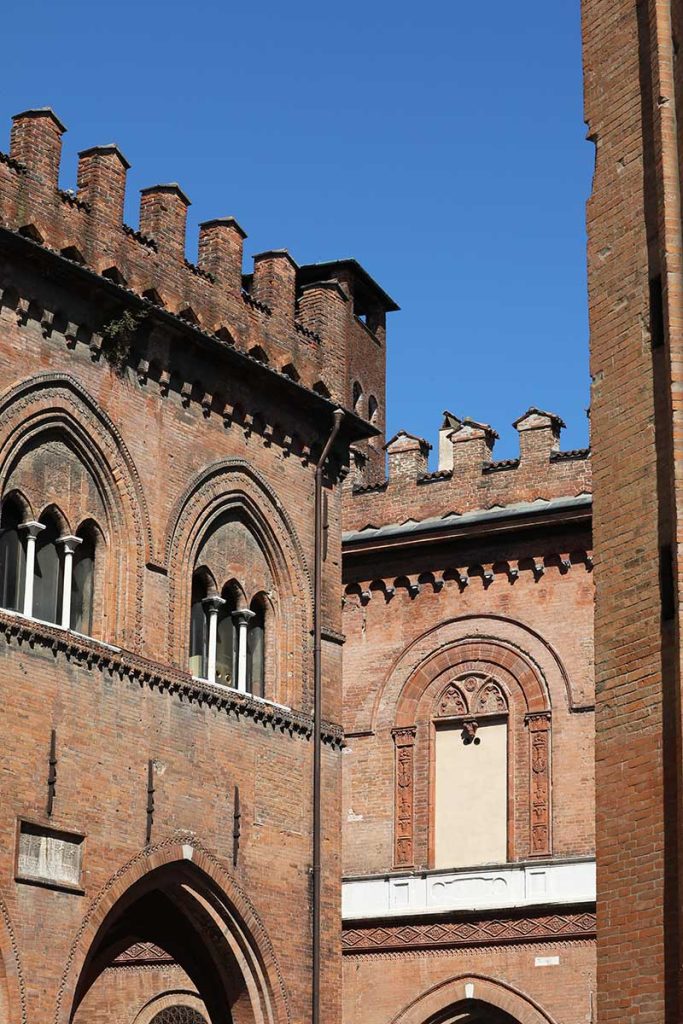
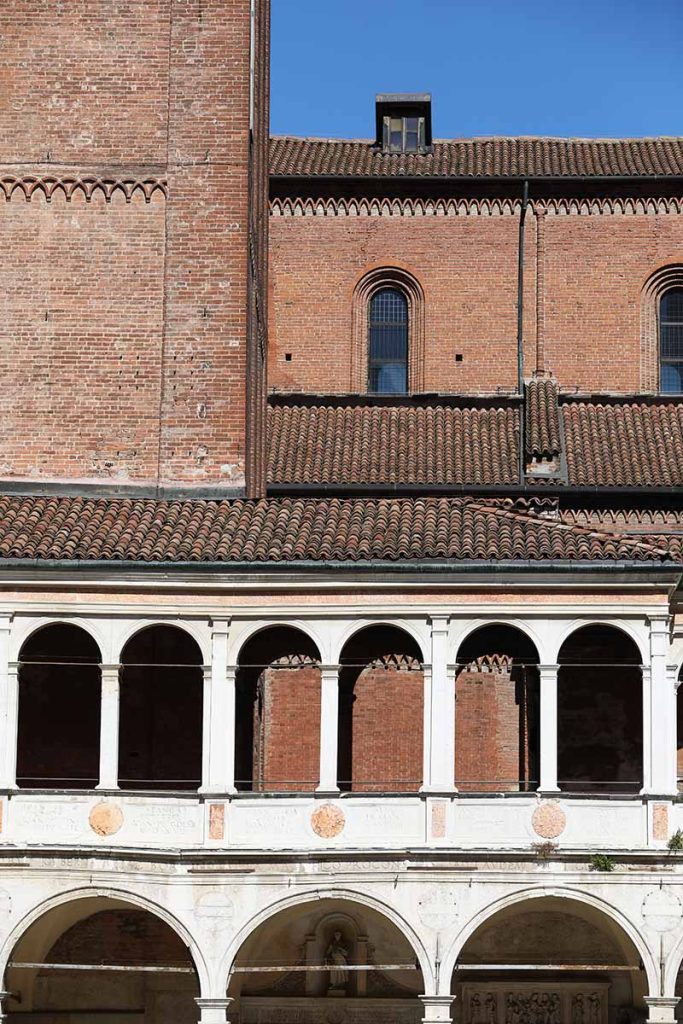
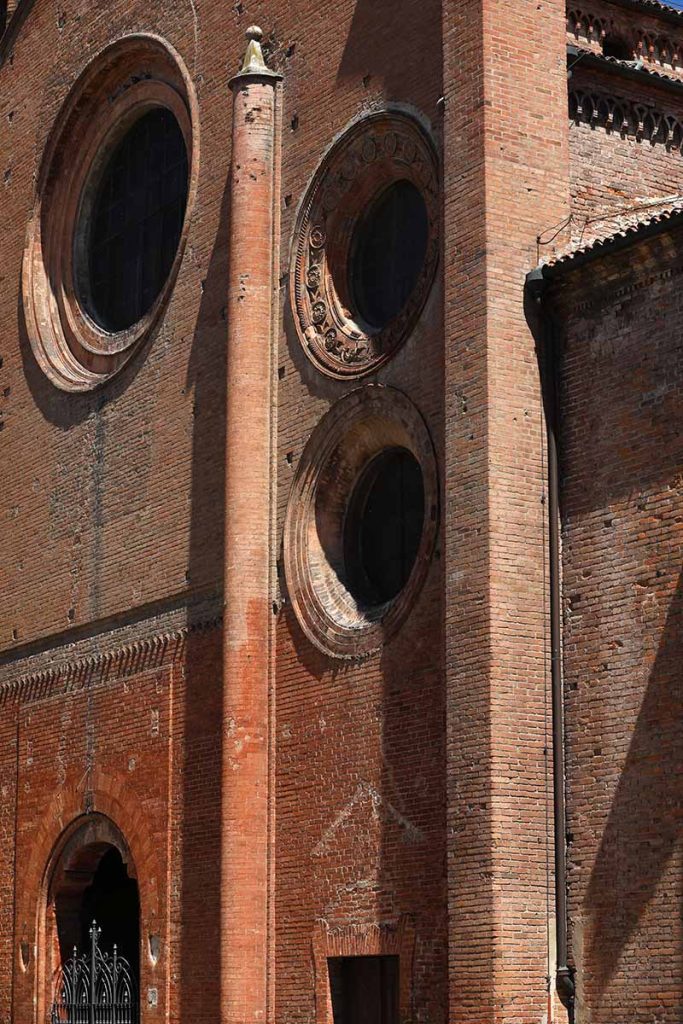
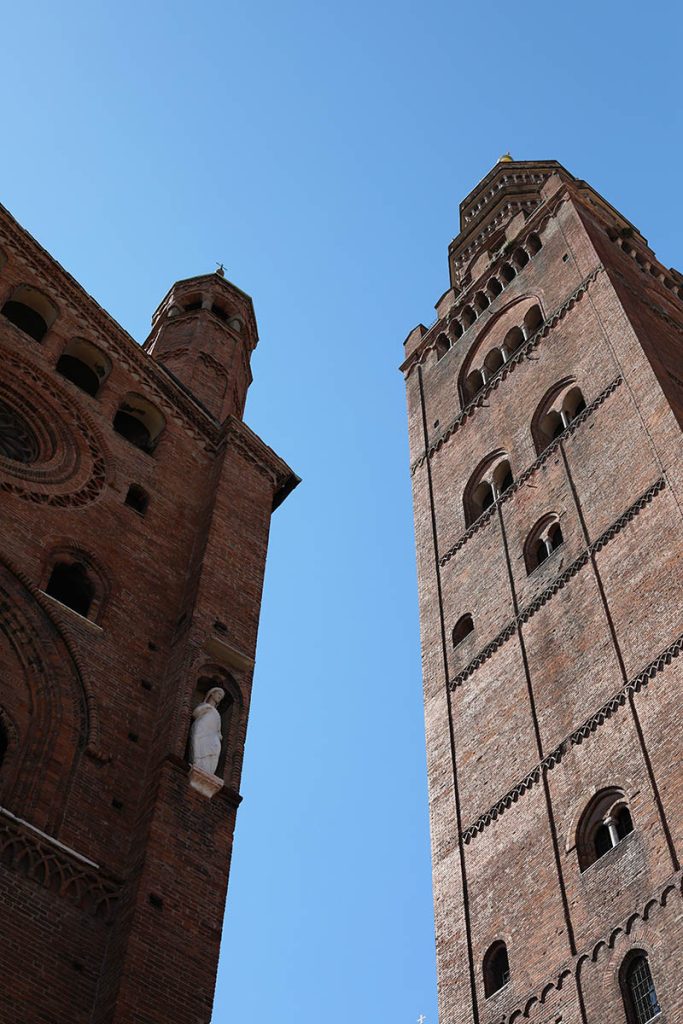
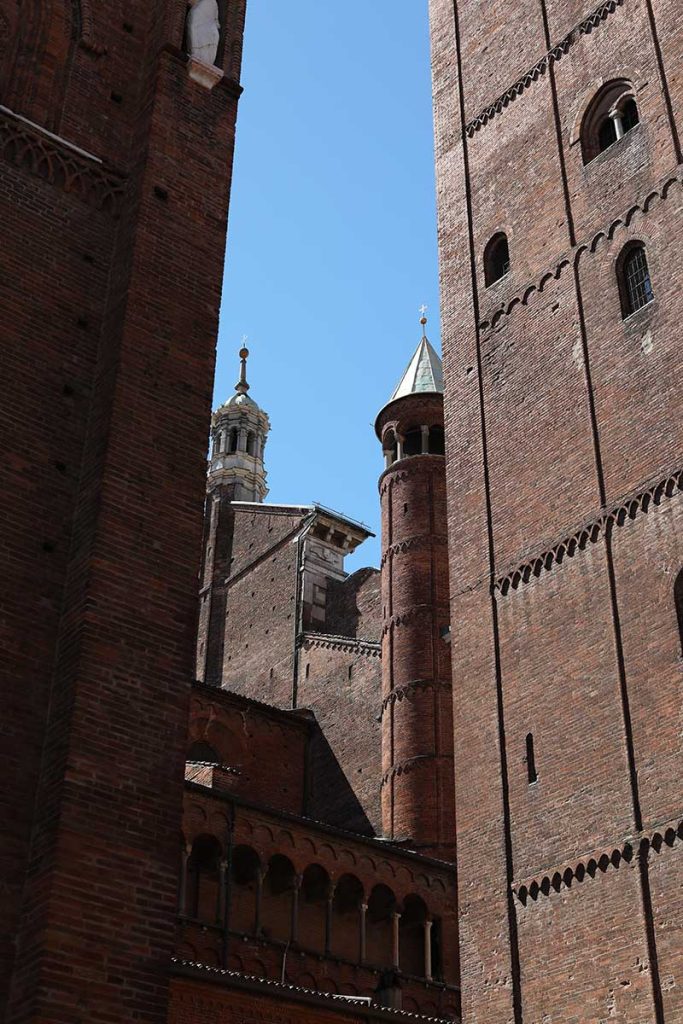
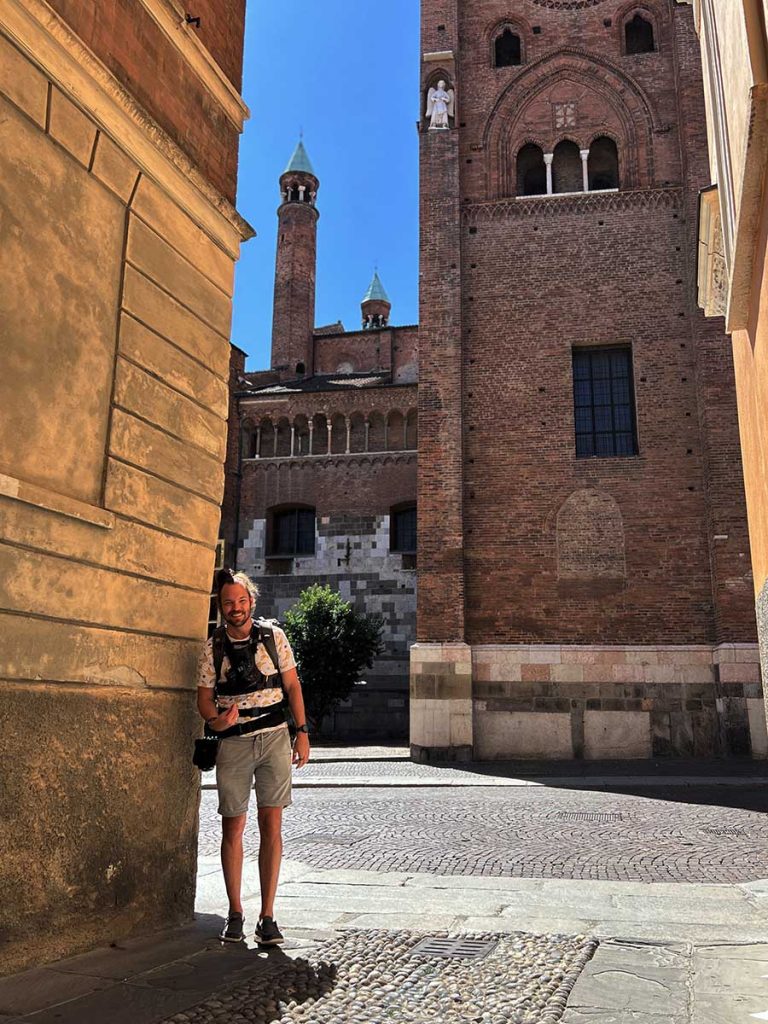
The Duomo di Cremona, a cathedral of mixed Romanesque and Gothic design, with white marble and red brick dominates one side of the piazza. I stood across from it for a long time, just looking up at how the lines played against the sky.
I definitely spent a good amount of time walking around the duomo, capturing it from different angels. The lines and perspectives were honestly really fun and interesting to experiment with. I basically took a mini series of people as they passed through the natural sunlight spot that was filtering through the buildings.


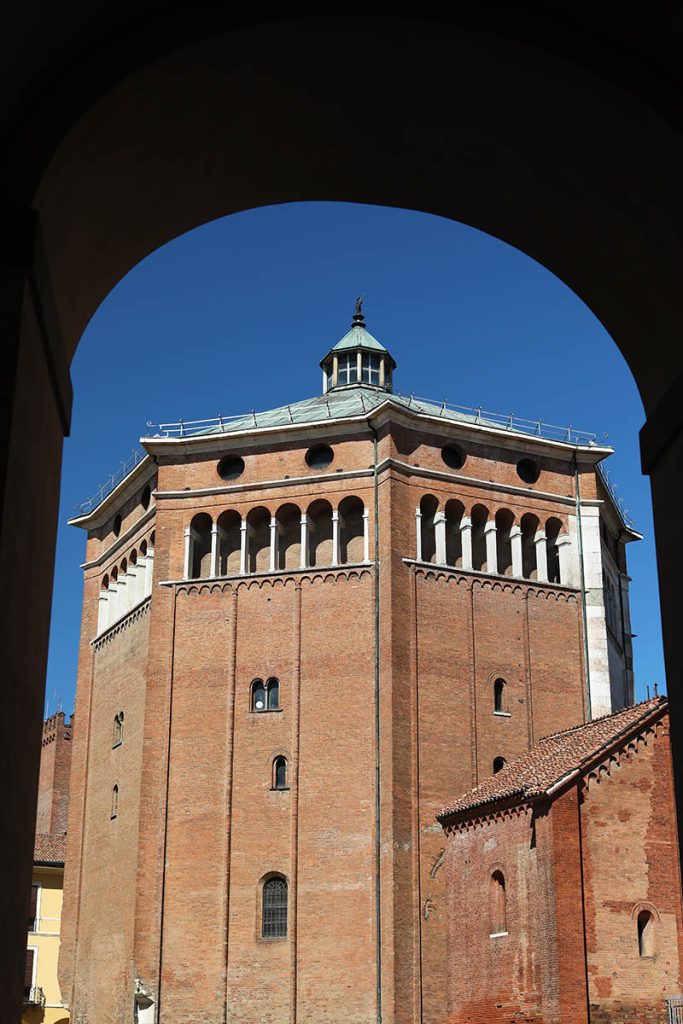
Right next to the duomo is the Baptistery of San Giovanni with its octagonal design dating way back to 1167. It stands about 34 m (112 ft) tall with a diameter of around 20.5 m (67 ft). Most of it is bare red brick, but two of its eight sides were clad in white marble during Renaissance-era restorations so it’s really good for textures. The marble narthex supported by sculpted lions was added to the north entrance in 1588, mirroring the style of the Duomo.


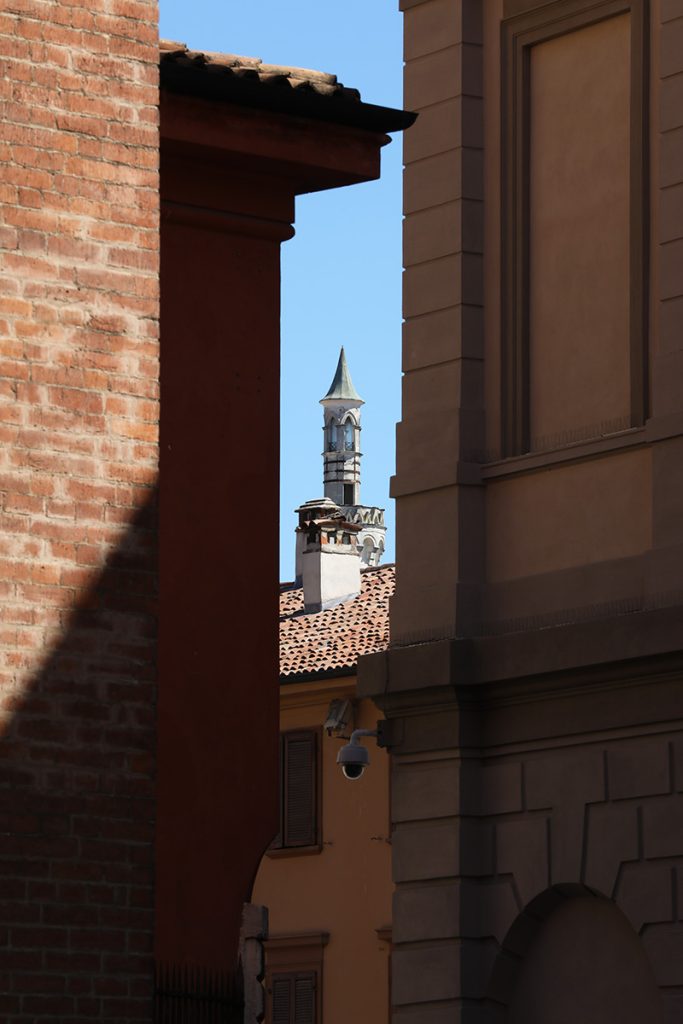
We had tickets to climb the tower later in the afternoon, so we also spent some time wandering around the neighborhood nearby. It’s there in the surrounding neighborhoods that the character and soul of the city really shines through the small details and awesome views of the duomo from a distance.


I could have wandered for hours if I hadn’t suddenly realized (almost too late) that it was time to think about lunch.
Actually, I already had my eye on two places right away, Trattoria del Tempo Perso (sadly, it’s now closed), and Hosteria 700. Unfortunately, one was fully booked, and the other was going to close before we could even make it there.
We called a few other places as well, but, just by chance, I decided to call Osteria Citadella even though it was a bit farther from where we were. It was a warm day and we were already feeling the heat, but let me tell you, the walk was worth it.
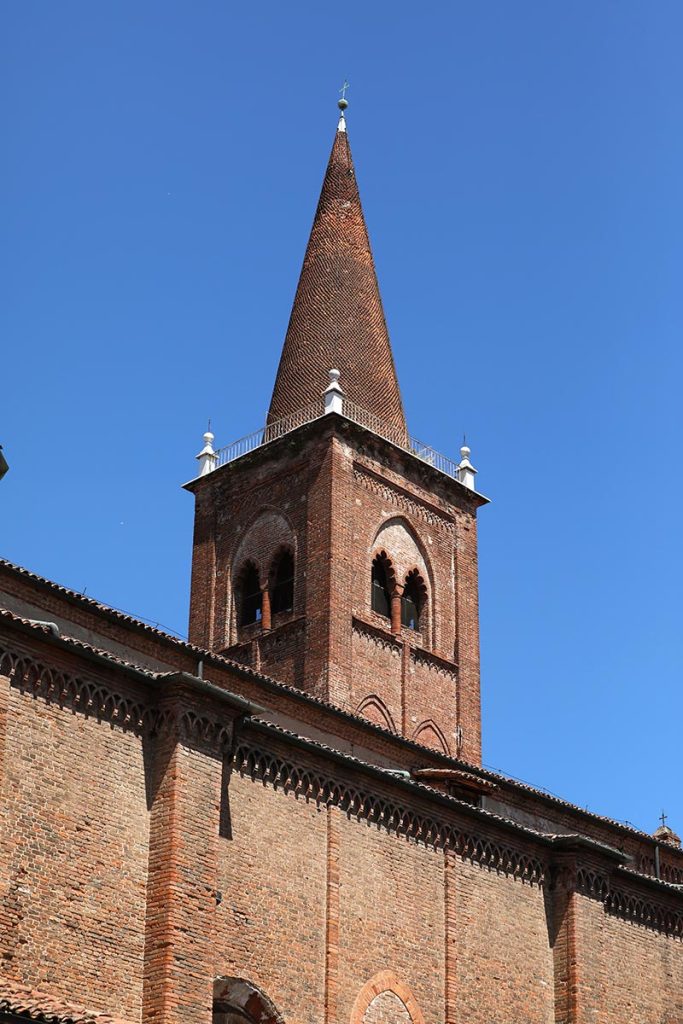
The neighborhoods we passed through were super interesting, filled with character and gems to be discovered – like the facade of the Chiesa di Pietro al Po, which was a very pleasant and welcome distraction from our growing hunger.


Arriving at the Osteria Citadella, we were greeted by the nicest lady who asked where we’d rather sit. We decided outside in the shade would be perfect and that courtyard was exactly what we needed. The food was great too. What stood out even more was the feeling of the place. We arrived later than most, closer to when places are usually closed for lunch, but they stayed open just for us.
Instead of rushing us, they welcomed us in and told us to take our time- con calma. They took their own break on the same patio, eating their lunch nearby as we had ours. It didn’t feel staged or performative. Just honest, local hospitality. I loved it, and I already can’t wait to go back 🙂
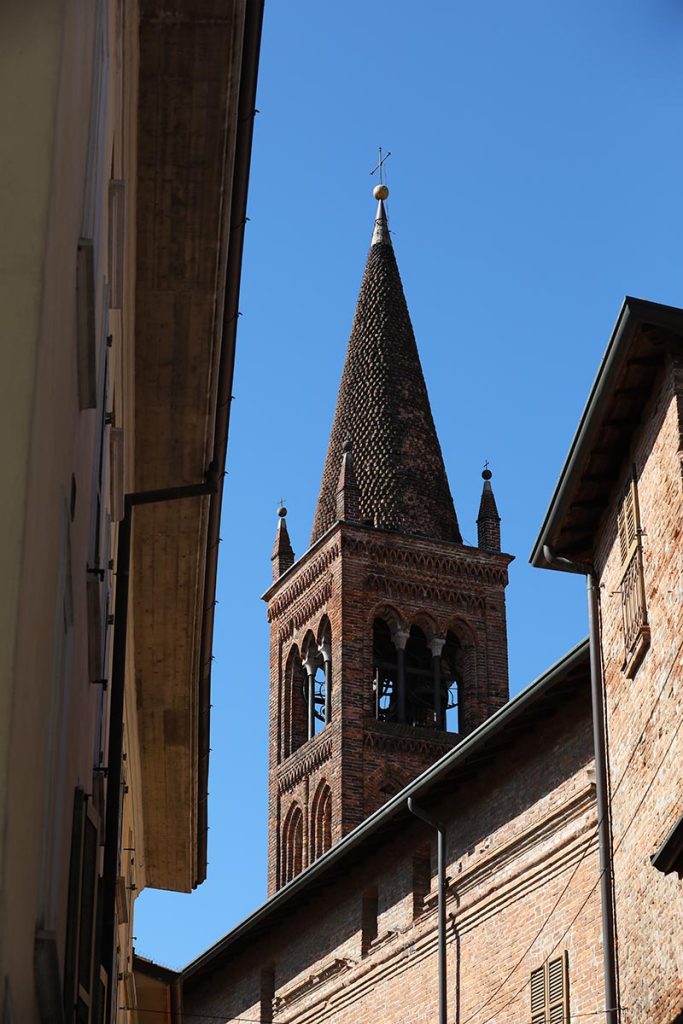
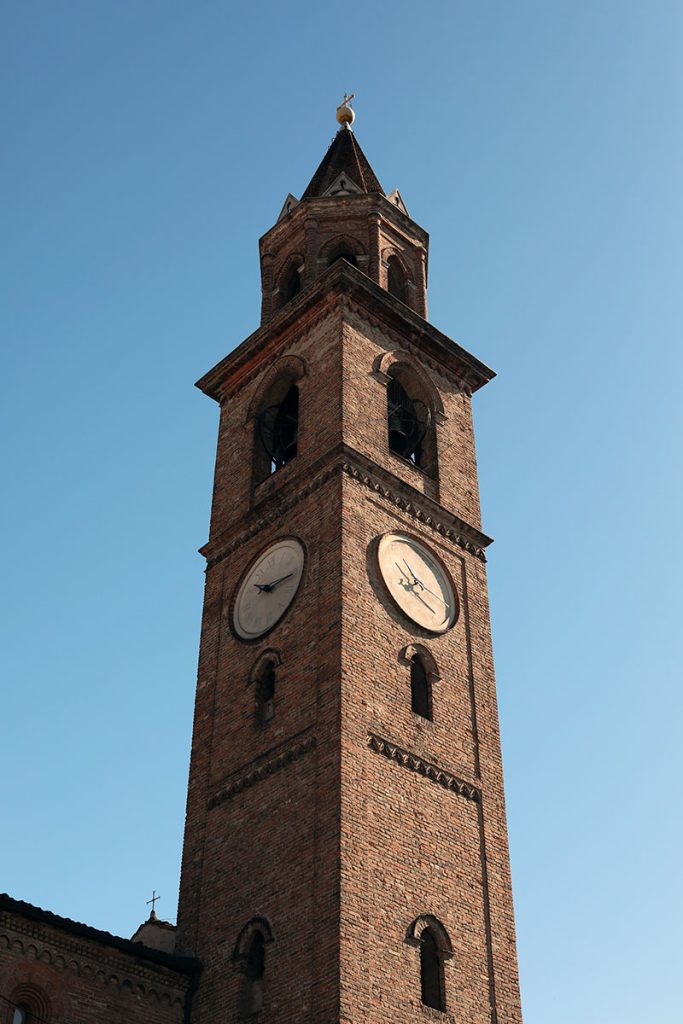
After lunch it was time to head to the “highlight” of the Cremona show: Il Torrazzo – Cremona’s medieval bell tower. Watch the video on the home page and you’ll understand what I mean when I say the word “highlight.” It is this absolutely massive tower that stands dominant over the whole of Cremona. It was built in phases between the 13th and 14th centuries and completed in 1309 and it is 112.54 m (369 ft) tall. Which makes it the tallest brick bell tower in Europe and there’s 502 steps to climb up seven levels.


The interior route is a mix of staircases that slowly becomes narrower as you go up. There are a few places to see narrow overlooks of the city as you climb higher and higher. Near the top, the stairs are literally one-person wide, and that’s when the swirling wind from the top panoramic terrace really starts kicking in. If I had been wearing a hat, I would have lost it. The wind was so strong it actually made me laugh, like nature showing off its power. It was a moment that made the climb feel more like a life experience than a workout.

The view from the panoramic terrace on the 7th level is wide open in every direction. The rooftops stretch out far, layered in reds and browns. Courtyards are tucked between them and church spires break the grid. You could trace the city’s shape from above, not in straight lines, but in subtle, lived-in curves and nooks. The Po River shimmers faintly in the distance. I stayed up there longer than I planned to, because I enjoyed every second of it.
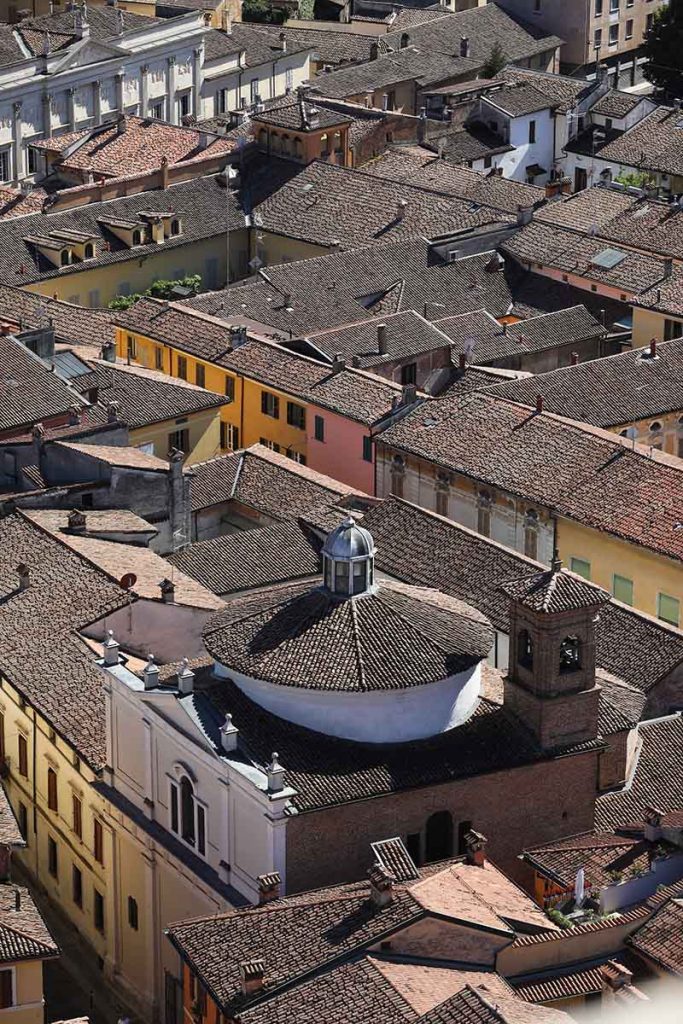
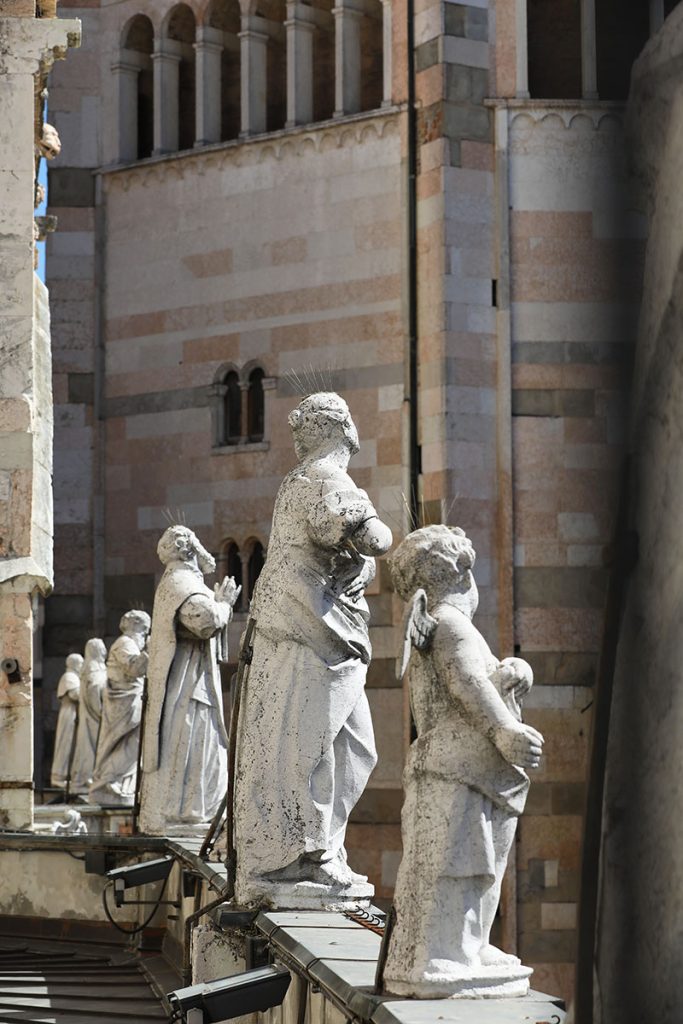
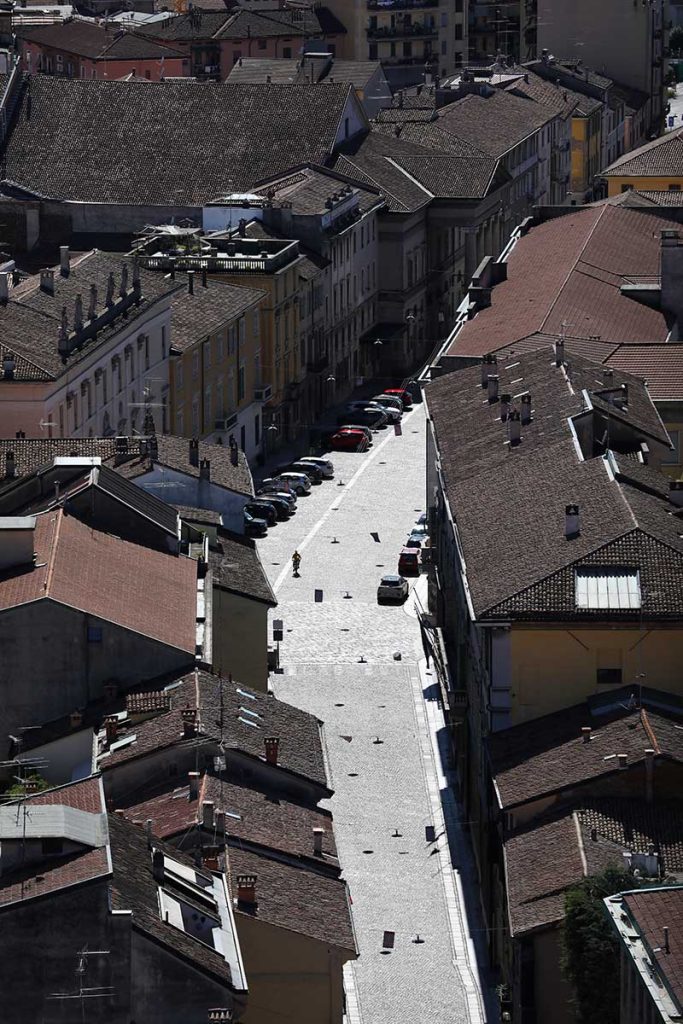
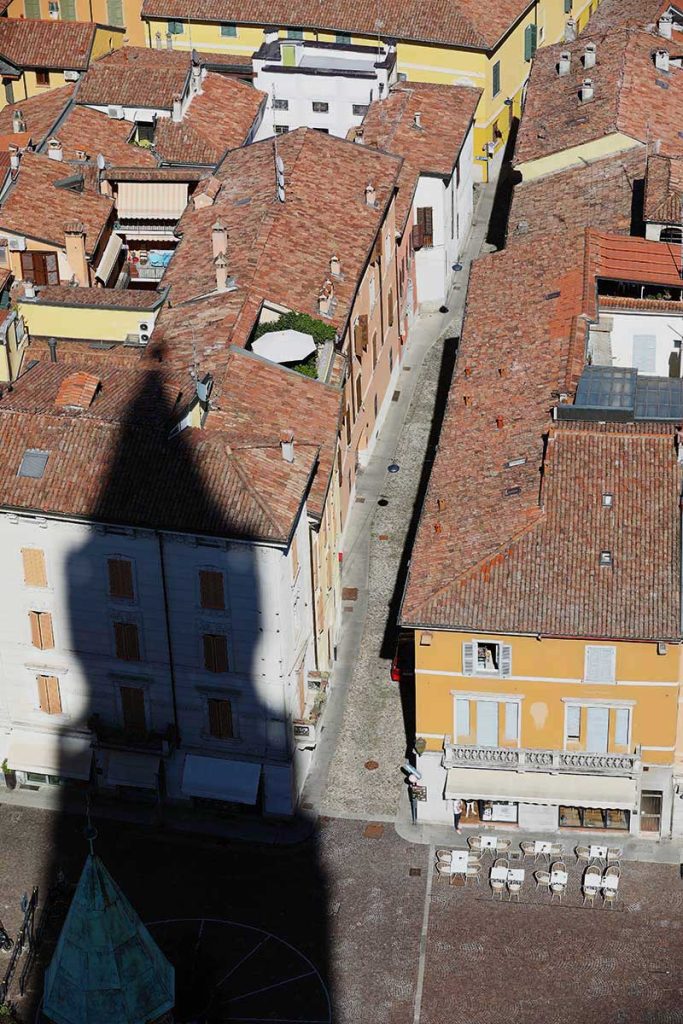
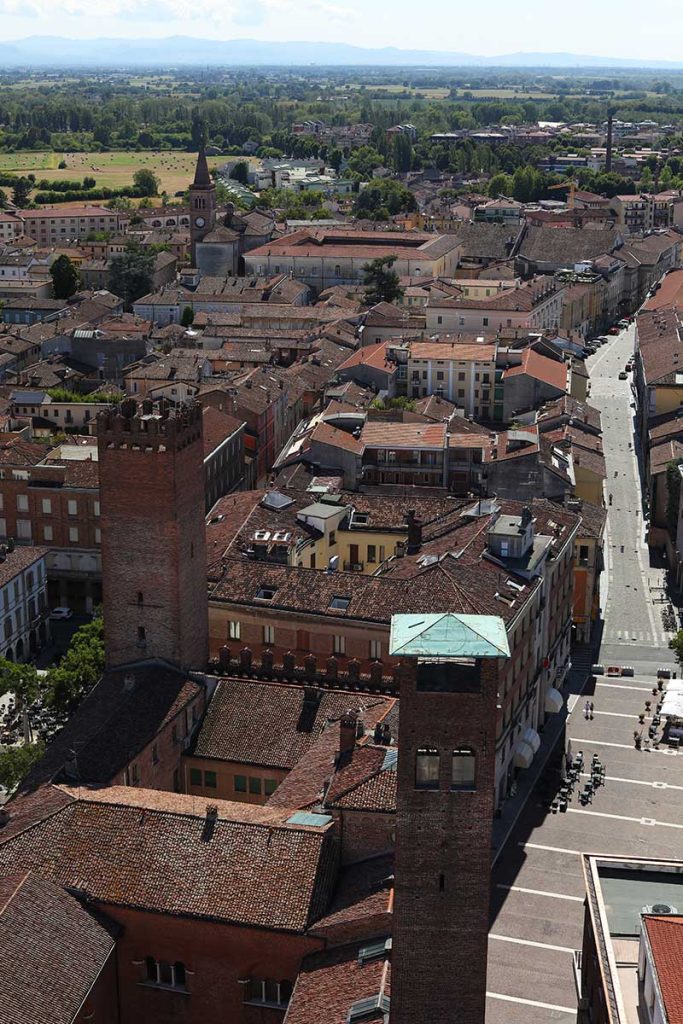
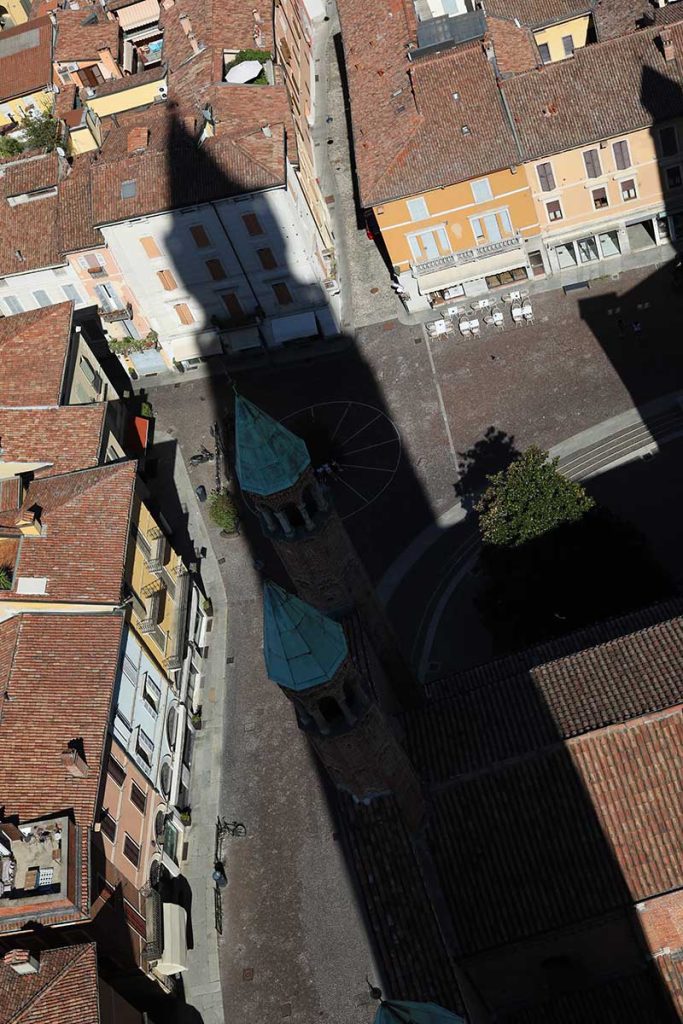
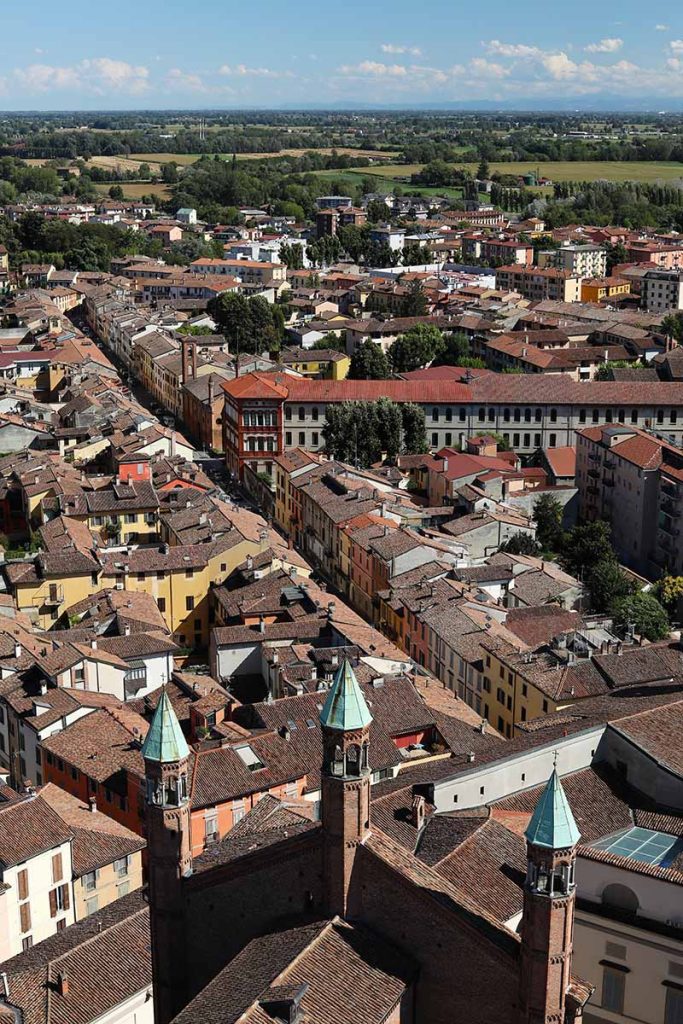
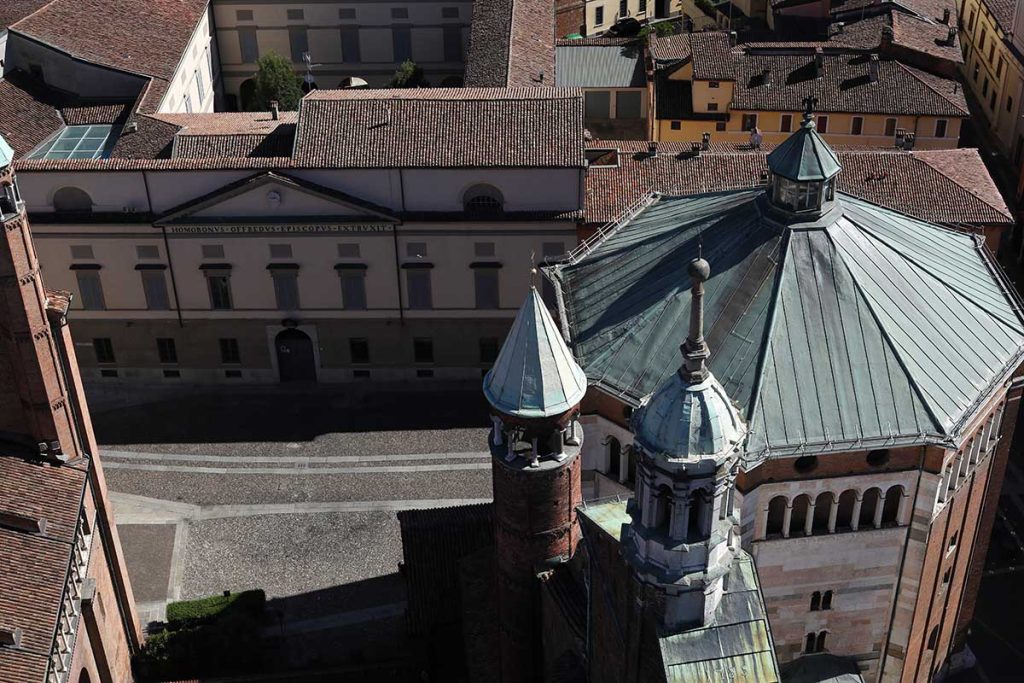
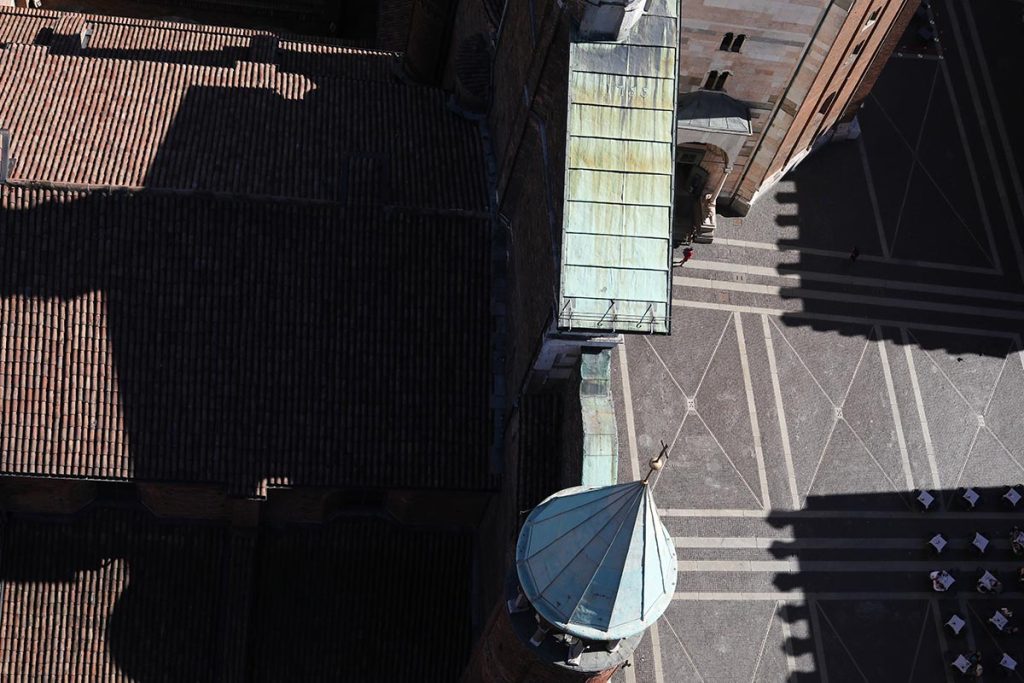
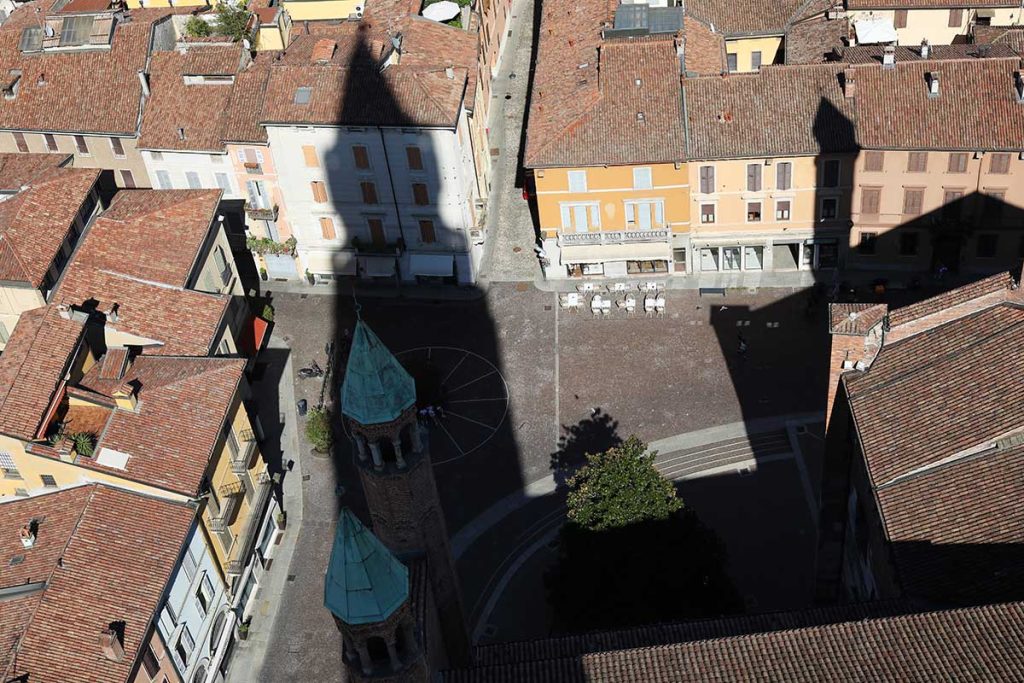
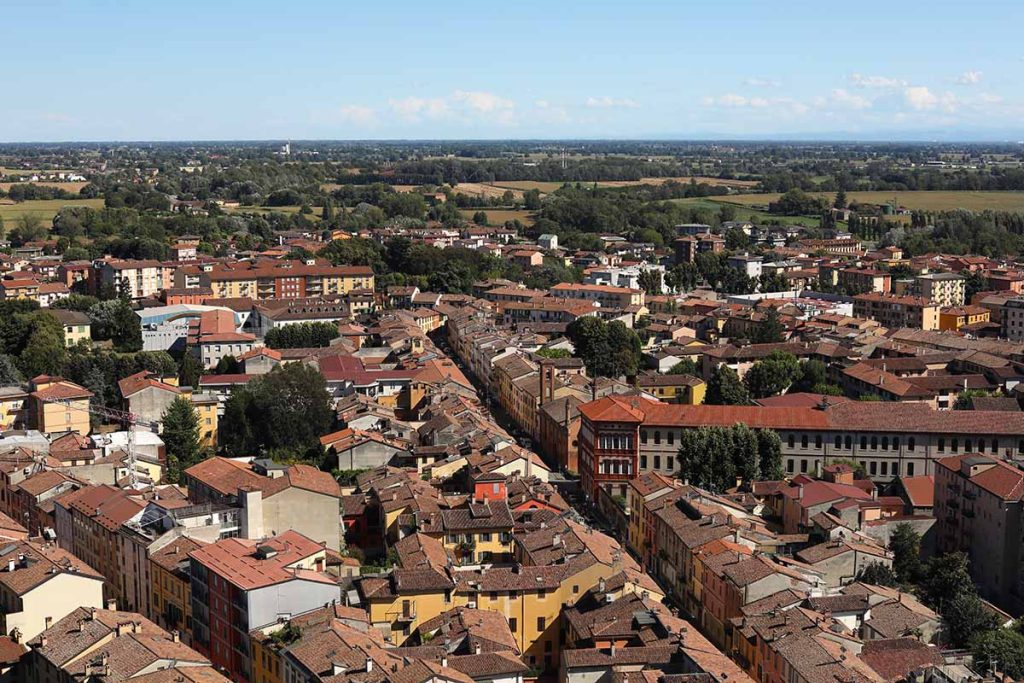
Travelling in Europe you might feel like views like this start to get old after a while, but honestly, they really don’t. Every tower I’ve climbed, and every overlook I’ve seen – I never get bored of them. There is always something inspiring to see and experience everywhere you go, and the view of Cremona from on top of Il Torrazzo is no exception.
Back on the ground, we stopped for a quick espresso and pastry at Pasticceria Duomo dal 1883. Just around the corner from the piazza, it had the kind of quiet confidence that comes from doing one thing well for a long time. I ordered something filled with cream and flaky on the outside- nothing fancy, but a perfect afternoon dessert that was perfect with my caffè macchiato.
After that, I made sure to take my time taking some creative photos around the duomo while the light was still good before continuing back into the winding streets of the city.
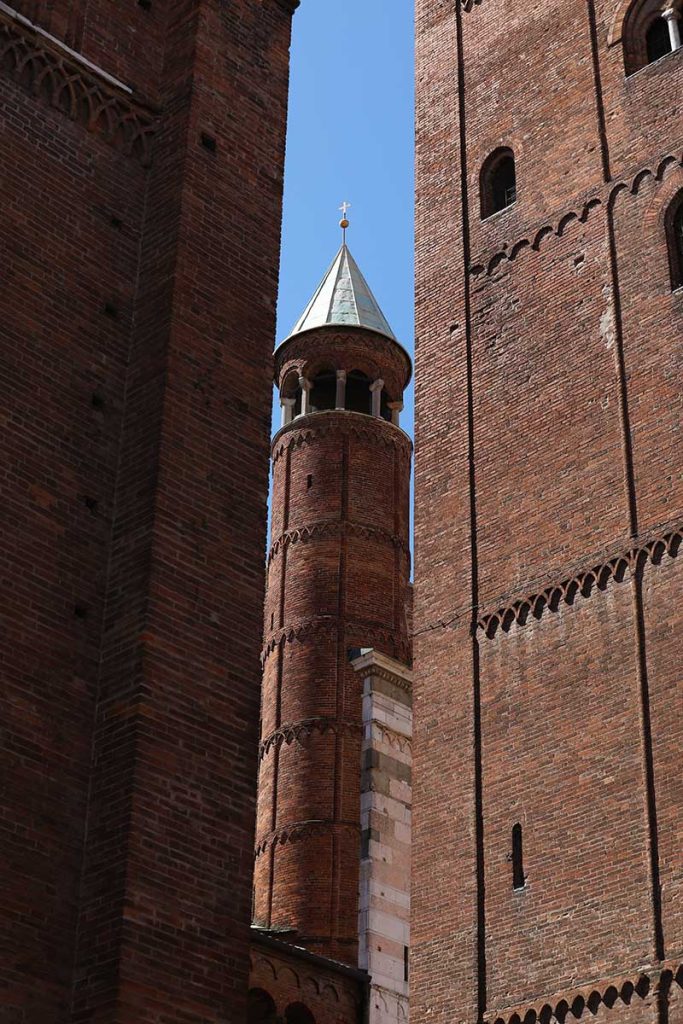
As we continued to walk, we came upon Piazza Stradivari, which I later found out was formerly Piazza Cavour, and to our pleasant surprise we came across a girl standing with her adorable pet pygmy goat. It was leashed and completely at ease. I couldn’t help myself – I walked over and asked about it. She let us pet it and chatted with us for a few minutes. That moment felt spontaneous and personal- one of those strange little scenes that locks into your memory and becomes part of how you remember a place. Because seriously, how often do you see someone walking a tiny pet goat? So awesome.


I was surprised by how all these little moments – unexpected architecture, warm welcomes over lunch, the rush of wind atop a tower, and yes, even the little pygmy goat, had woven themselves into a personal and unique memory of Cremona.
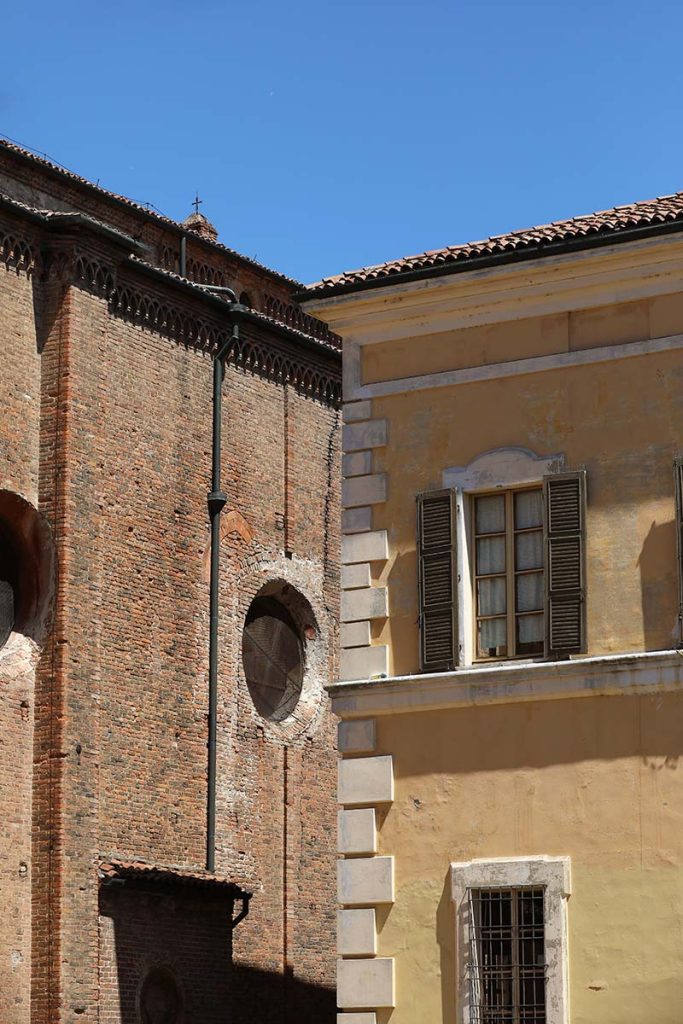
It revealed itself to me slowly, and I think that’s what stayed with me most. It wasn’t a city that demanded my attention or tried to impress all at once. Instead, it offered small moments, light moving across the brickwork to create a shifting kaleidoscope of patterns, quiet neighborhoods just beyond the center, and chance encounters.
By the end of the day, it felt familiar in a way that was unexpected for a first visit. From the height of Il Torrazzo to the shaded side streets, Cremona felt lived-in, human, and balanced. Will I visit Cremona again? Absolutely – in a city like Cremona, one can never run out of interesting things to explore.
Cremona Highlights & Stops
Architecture & Landmarks
Duomo di Cremona (Cattedrale di Santa Maria Assunta)
The visual and emotional anchor of the city. Romanesque and Gothic layers in white marble and red brick, best photos can be got from playing with the different angles and distances.
Google Maps
Baptistery of San Giovanni
Octagonal and beautifully contrasting with the Duomo. A perfect subject for light, shadow, and texture studies.
Google Maps
Il Torrazzo di Cremona
The tallest brick bell tower in Europe and one of the best panoramic views in northern Italy. The climb is an experience in itself… hold onto your camera!
Google Maps
Chiesa di San Pietro al Po
A beautiful, slightly unexpected facade.
Google Maps
Statue of the Cello (Giorgio Palù)
A striking modern tribute to Cremona’s violin-making heritage near the station and an early signal of the city’s musical soul.
Google Maps
Scuole Pubbliche Elementari III Circolo R. Colombo / Conservatorio C. Monteverdi
A surprisingly photogenic stretch of architecture in deep rust-red tones.
Google Maps
Neighborhoods & Walking Routes
Parco al Vecchio Passeggio
A calm green corridor ideal for some more green shots to contrast the striking buildings.
Google Maps
Parco dei Bastioni di Porta Mosa
Quiet, residential, and revealing. This is a great spot great for getting shots of daily life.
Google Maps
Coffee & Sweet Stops
Pasticceria Duomo dal 1883
A classic Cremonese pastry shop just steps from Piazza del Comune. Perfect for an espresso break and something flaky and cream-filled.
Google Maps
Lunch & Dining
Osteria Citadella
Warm, unpretentious, and deeply local. The shaded courtyard, relaxed pace, and genuine hospitality made this one of the most memorable stops of the day.
Google Maps
